
 book a call with us
BNB keeps the on-chain work smooth, though the backend is where the complexity really starts to appear. The moment you need your dApp to react, to trigger a workflow, call an API, or send a transaction – everything slows down. You end up juggling scripts, maintaining servers, and babysitting cron jobs that keep breaking. What if your backend could listen to every BNB event, […]
Read MoreBuilding on Base feels a bit like discovering a faster lane in the Web3 universe. The blockchain, launched by Coinbase, has quickly become a favorite among developers seeking scalability and low fees without compromising Ethereum’s reliability. It’s open, decentralized, and welcoming to anyone ready to create something real on-chain.
Still, the journey from idea to on-chain launch can feel heavy: event listeners, integrations, and backend logic often slow things down.
Kwala fills that gap with its no-code simplicity, turning complex blockchain setups into automated, visual workflow automation.
Here’s what we’ll walk through together: explore what makes Base stand out, how Kwala can help you ship smarter, and how to build on Base using Kwala.
Understanding Base: A quick overview
Base is a Layer-2 blockchain built on Ethereum using Optimism’s OP Stack. It’s built to make Web3 development faster, cheaper, and smoother without losing the security and reliability that developers depend on.
For anyone building on-chain, it simplifies what used to be complex, from transactions to scaling.
Here’s what makes Base stand out:
- Lower fees and quicker confirmations
- Coinbase-backed reliability and growing community
- Built for decentralized apps, automation, and scalability
Together, they make Base a dependable choice for developers building dApps, NFTs, or multi-chain workflows that need both flexibility and speed.
How Kwala simplifies building on Base
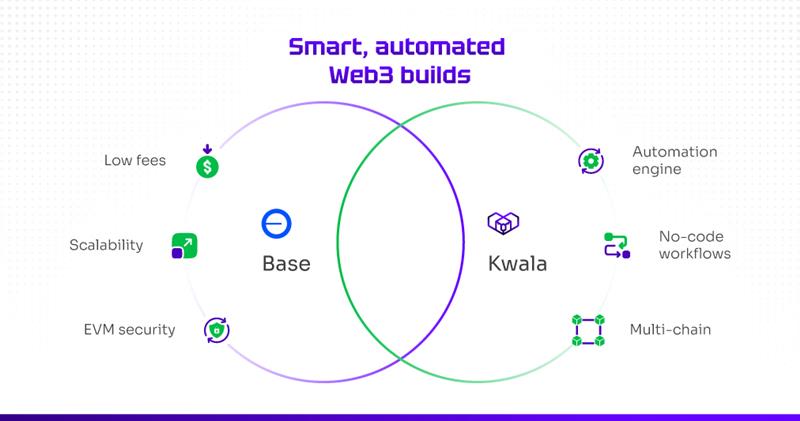
If you’re building on Base, you already get scalability, low gas fees, and Ethereum-level security. What’s missing is a way to automate everything happening on-chain, without spending hours writing backend logic or maintaining servers. Kwala solves this effortlessly.
Here’s how it makes building on Base simpler and smarter:
- Declarative YAML scripts: Set up logic, triggers, and actions in minutes, not hours.
- Event listeners: Respond instantly to on-chain activity such as mints, transfers, or contract updates.
- Web2 integrations: Supports external API calls for hybrid workflows that connect web and blockchain systems.
- Decentralized credit-based system: Transparent, flexible, and built with a pay-as-you-go model and no vendor lock-in.
- The only workflow automation protocol for Web3: Purpose-built for developers who want to automate without compromising control.
Kwala gives developers the freedom to focus on innovation while it handles everything behind the scenes. It’s reliable, adaptable, and built for the future of Web3 development.
Supported chains: Where Base fits in
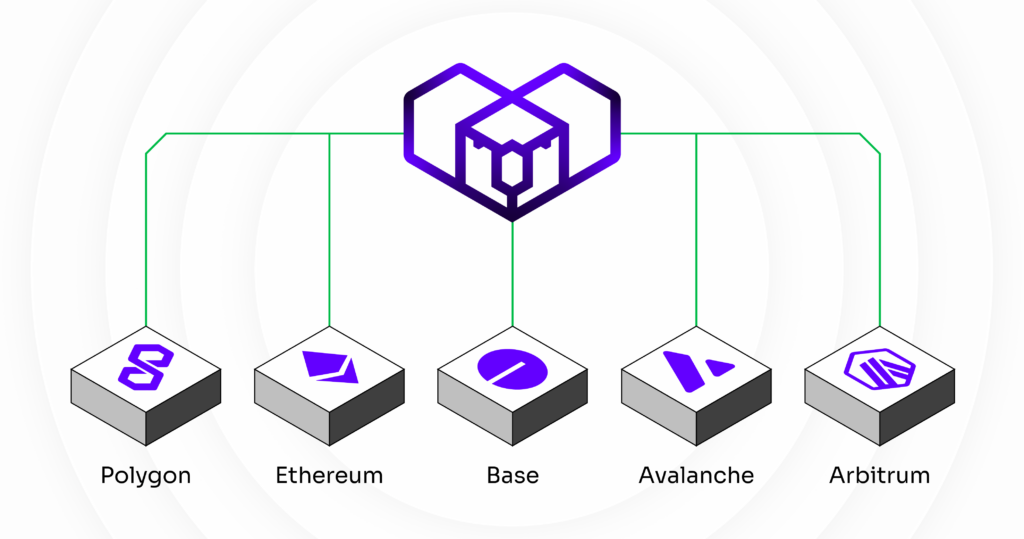
Then connect all into a central Kwala automation engine, with arrows for cross-chain triggers.)
One of the biggest advantages of Kwala, however, is its cross-chain compatibility. Developers aren’t limited to a single network – they can automate actions and run workflows across multiple blockchains without rebuilding logic each time. This flexibility makes Kwala a true multi-chain powerhouse for Web3 automation.
KWALA currently supports major EVM-compatible networks, including:
- Ethereum: The foundation for most decentralized applications.
- Polygon: Ideal for low-cost, high-speed transactions.
- Avalanche: Built for fast finality and scalable dApps.
- Arbitrum: Optimized for advanced rollups and efficiency.
- Base: Coinbase’s Layer-2 network for fast, affordable on-chain development.
Kwala achieves this by creating cross-chain workflows that connect actions across these networks. Developers can, for example, trigger a smart contract on Base when a transaction occurs on Polygon, or link Web2 APIs across multiple blockchains in a single seamless flow.
It’s all powered by Kwala’s automation engine, which keeps multi-chain builds consistent, scalable, and reliable.
How to build on Base using Kwala
Now that we understand what Base is and how Kwala supports it, let’s walk through the process of setting things up, deploying your first contract, and automating your workflow using Kwala.
Here’s the complete step-by-step process:
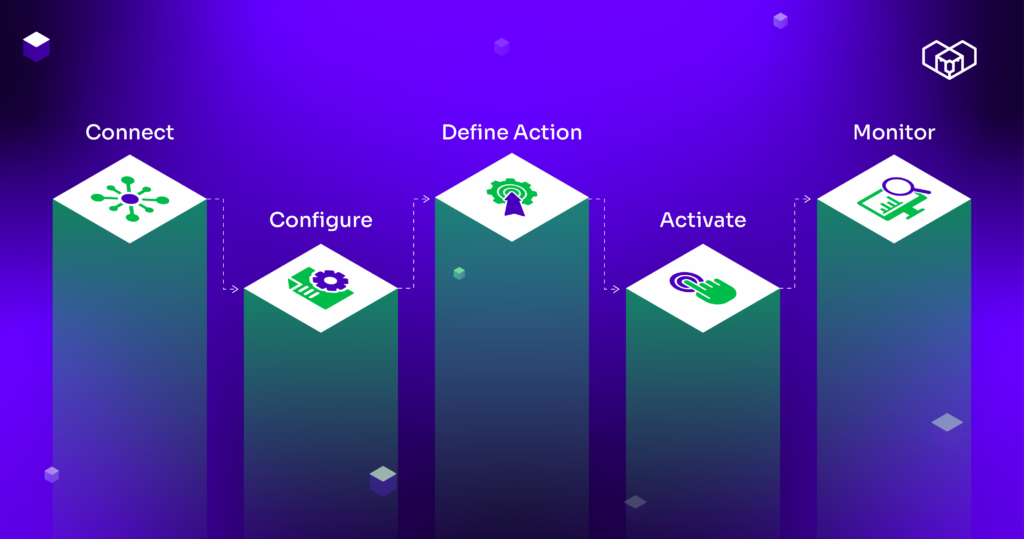
Step 1: Connect to metamask wallet
Open kwala website and connect your metamask wallet.
Approve the connection request in your MetaMask wallet to link it with the KWALA network.
Step 2: Configure trigger for Kwala workflow using Workflow buildler
Select “Event” as Workflow Trigger and complete Trigger Configuration by providing Smart Contract address, Chain ID and Trigger Event details.
Kwala auto detects the ABI for verified contracts and fetches event details.
Optionally, you can provide source code for the Smart contract and configure Trigger Event details.
Step 3: Define your actions
Attach the actions that should run after each trigger: send an API request, update data, notify users, or launch cross-chain flows on Polygon, Arbitrum, Base, or BNB.
All done through a no-code, decentralized automation layer.
Step 4: Activate and monitor
Turn on your workflow and watch Kwala execute everything instantly. Track logs, action status, retries, and event flow from one clean dashboard.
From test to mainnet, now you don’t have to manage a single backend component. Kwala aligns your Base app with true Web3 workflow automation, keeping it fast, decentralized, and production-ready.
Building smarter on Base with Kwala
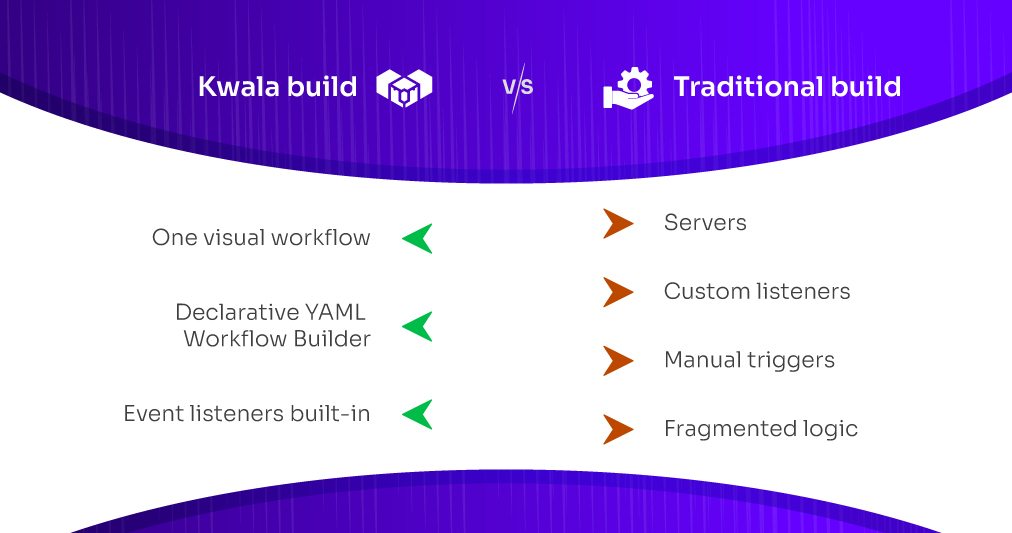
Base provides developers with a fast, secure, and scalable blockchain foundation to build upon, while Kwala adds the missing layer of workflow automation that makes Web3 development seamless.
Together, they simplify everything from on-chain triggers to cross-chain execution, without complex coding or vendor lock-ins. For developers aiming to build efficiently in a truly decentralized ecosystem, this combination delivers both power and flexibility.
Build on Base the smarter way. Start automating your Web3 workflows with Kwala today.
FAQs on Base
Is Base better than Solana?
Base offers Ethereum-level security and EVM compatibility, while Solana focuses on extremely high speed and throughput, which is great for apps that need fast transactions. Each excels in different areas depending on the project.
Is Base related to Coinbase?
Yes, Base was developed by Coinbase as its official Layer 2 blockchain, built on Ethereum using Optimism’s OP Stack. This means it inherits Ethereum’s security while offering cheaper, faster transactions.
Who is the founder of Base blockchain?
Base was created by the Coinbase engineering team, led by Jesse Pollak, who heads protocols at Coinbase.
Is Base a good blockchain?
Yes, Base is considered a strong blockchain choice for developers because it combines Ethereum’s security, low fees, and scalable infrastructure, making it ideal for Web3 apps.