
 book a call with us
Backend work in Web3 rarely starts with complexity; it grows into it. A developer sets out to track a contract event or run a simple on-chain action. Soon they’re piecing together RPC endpoints, maintaining indexers, writing monitoring scripts, and managing infrastructure that was never meant to be part of the original roadmap. Multiply this across multiple chains, each with […]
Read MoreBuilding in Web3 still feels heavier than it should. Developers spend more time fixing infra, writing listeners, and stitching chains together than actually shipping features. A Web3 backend platform for developers is no longer a nice-to-have. It’s essential.
Kwala steps in as a developer backend platform that Web3 teams can trust. It provides multi-chain workflow automation for developers, a serverless blockchain infrastructure for developers, and a no-DevOps Web3 backend platform designed for real-world products.
This guide will break down exactly how Kwala achieves this, and how multi-chain workflow automation for developers can help you build faster with less stress.
The real problem: Web3 development is overly complicated
Web3 development looks powerful from the outside, but it often feels overwhelming once you start building real products. Small features demand heavy infrastructure, while simple automations turn into full backend systems.
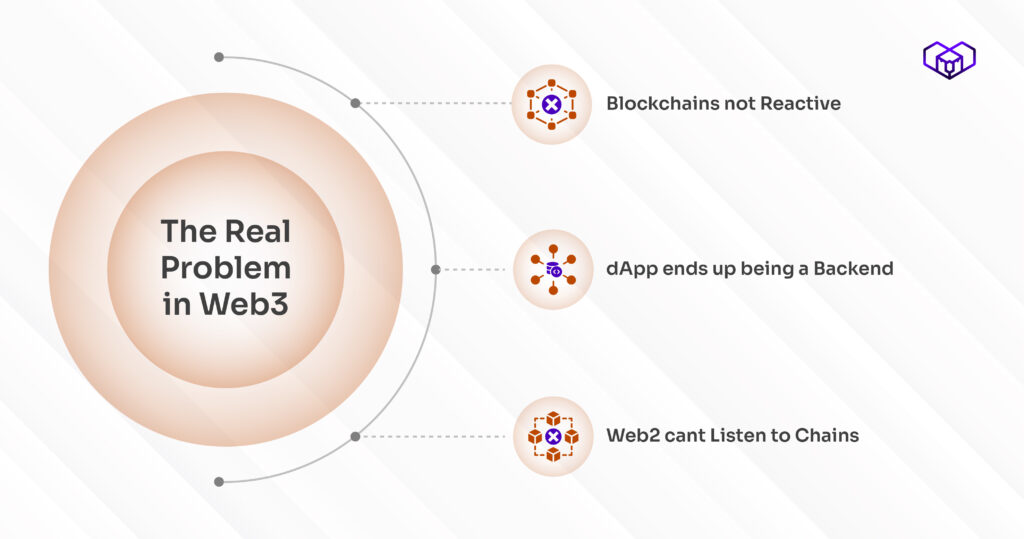
Let’s see why Web3 has become so complicated now:
Blockchains are not reactive
Blockchains verify state, but they don’t react to events or trigger actions on their own. Developers must build the entire reactive layer manually, from listeners to custom logic. Without a strong Web3 backend platform for developers, this becomes a time sink that slows every release.
Every dApp Ends Up Building a Backend
Most dApps slowly become backend companies because they must maintain:
- Polling engines
- Worker queues
- RPC listeners
- Retry logic
- Cross-chain bridges
This blocks real progress and drains time.
Web2 Systems Can’t Listen to Chains
APIs, databases, CRMs, and microservices can’t consume on-chain events without heavy custom connectors. Enterprises often build fragile bridges that break under scale and cost weeks to maintain. This gap makes adoption harder and slows integration timelines.
This is why multi-chain workflow automation for developers and a clean blockchain workflow engine for smart contract developers are becoming essential today.
Enter Kwala: The accessibility layer for every chain
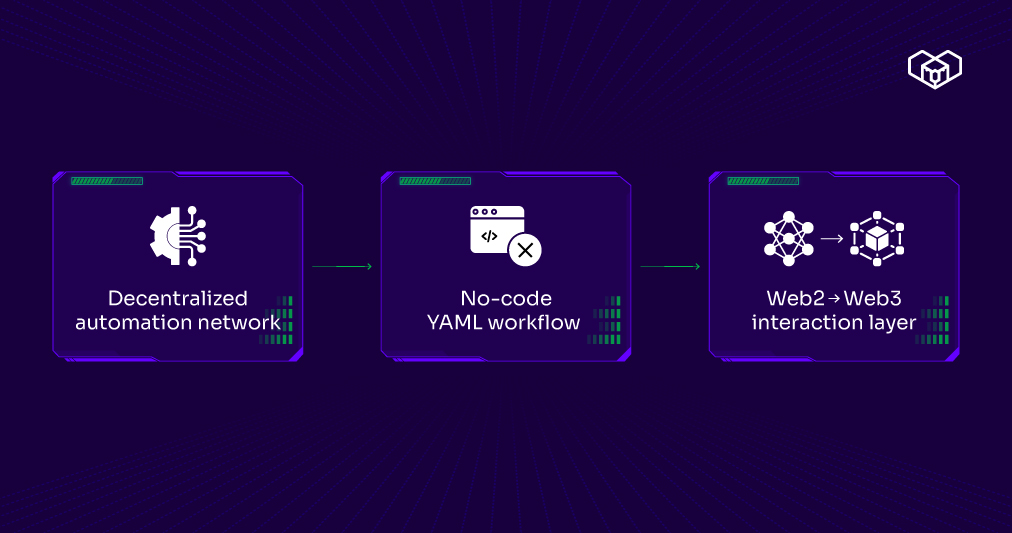
Kwala fills the gap that has slowed Web3 development for years. It gives teams a cleaner, faster way to build without wrestling with infra. Instead of managing your own reactive layer, Kwala provides a unified system that simplifies everything developers struggle with today.
Kwala brings three powerful capabilities to developers, like:
- A decentralized automation network that reacts to blockchain events in real time.
- A no-code YAML workflow engine that lets teams express smart logic without backend coding.
- A Web2 ↔ Web3 interaction layer that removes the friction between APIs, services, and on-chain actions.
Kwala doesn’t replace existing chains or tools. It amplifies them by giving developers backendless dApps with Web3 tools instead of maintaining heavy infrastructure.
How Kwala transforms developer workflows
Beyond its core value as a Web3 backend platform for developers, Kwala reshapes how teams plan, build, and deploy on-chain logic. It removes the weight of backend engineering and gives developers a simpler, unified way to manage events, triggers, and multi-chain operations.
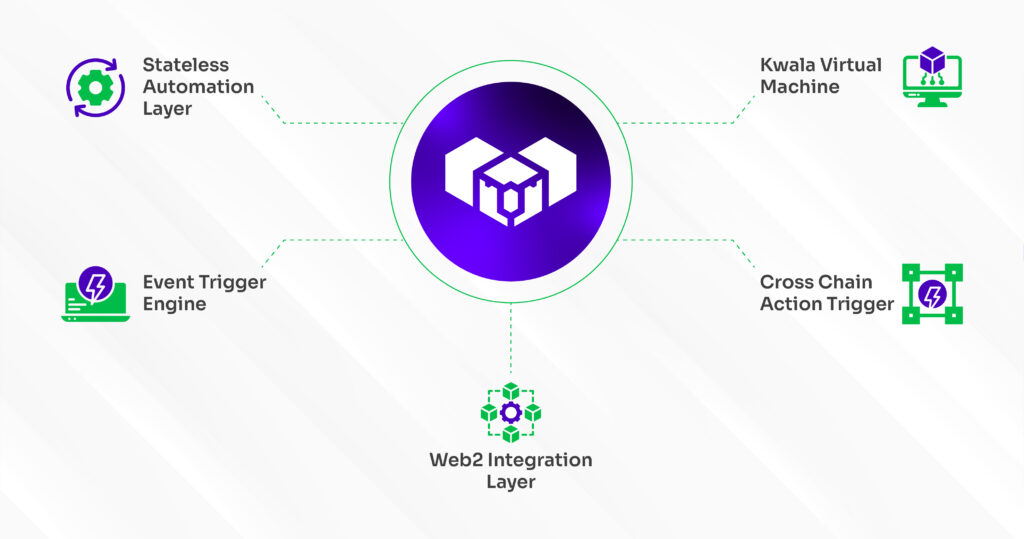
Here’s how it changes the day-to-day experience:
Stateless automation layer
Kwala shifts workflow logic off-chain into a deterministic, decentralized environment. This removes the need for servers, polling loops, or custom backend systems.
Teams building backendless dApps can finally rely on a serverless blockchain infrastructure that reacts instantly without extra overhead, making Kwala a strong developer backend service for DeFi dApps.
Kwala virtual machine (KVM)
The KVM interprets YAML workflows the same way across every decentralized runner, giving developers predictable execution without maintaining infra. It also supports clean event extraction using re.event(n), which simplifies how smart contract data gets used in workflows.
This is a major upgrade for teams that need a dependable blockchain workflow engine for smart contract developers.
Event trigger engine
Kwala supports a wide range of real-time triggers, allowing workflows to react automatically without custom listeners. It handles this through its event-driven engine, which captures and processes blockchain and external signals smoothly.
This includes:
- Smart contract events
- Time-based intervals
- Price changes
- Wallet activity
- Webhooks
Such flexibility turns Kwala into a dependable developer backend platform Web3 teams can use for automated, reactive logic.
Cross-chain action engine
Kwala makes multi-chain execution much simpler by allowing developers to define all logic inside a single YAML file. Instead of maintaining custom bridges or workers, the platform orchestrates actions across networks through structured workflows. It can handle:
- Contract calls across chains
- Token transfers
- Multi-step on-chain logic
This creates real multi-chain workflow automation for developers, eliminating the complexity that normally slows projects down.
Web2 integration layer
Many products still depend heavily on Web2 systems such as CRMs, APIs, and cloud services. Kwala links these directly with Web3 events, eliminating the reliance on fragile connectors or ad-hoc middleware.
Supported integrations include:
- REST APIs
- Databases
- Cloud functions
- CRM connections
Interoperability like this positions Kwala as the ideal no-DevOps Web3 backend platform, bringing Web2 and Web3 workflows together without added engineering burden.
Why Kwala is the web3 backend platform developers need
Web3 continues to grow more powerful each year, yet the developer experience has barely kept pace. Teams still struggle with backend load, multi-chain logic, and fragmented Web2-to-Web3 integrations.
A true Web3 backend platform for developers must simplify all of that – not add more layers. Kwala stands out by providing builders with a multi-chain workflow, a clean blockchain workflow engine, and a serverless blockchain infrastructure for developers that replaces heavy custom setups.
Switch to Kwala, and replace complex Web3 infra with a single decentralized backend!
FAQs on developer backend platform Web3
What does a Web3 developer do?
A Web3 developer builds smart contracts and dApps that run on decentralized networks. They also manage on-chain logic, events, and automation, often relying on a Web3 backend platform for developers to simplify the heavy lifting.
What is the most important skill in Web3?
The core skill is understanding smart contract behavior and how blockchain state changes. Developers who grasp this can design safer systems and use multi-chain workflow automation to ship faster.
How can Web3 be used in web applications?
Web apps can tap into Web3 for payments, identity, asset ownership, and automated actions. Connecting a frontend to a serverless blockchain infrastructure for developers makes those on-chain features easier to embed.
Which language is best for Web3?
Solidity is the strongest choice for Ethereum ecosystems, while Rust powers chains like Solana. Many teams still use JavaScript or TypeScript when working with a Web3 backend platform for developers that handles integrations and workflows.