
 book a call with us
Thirdweb vs Kwala: Let’s compare both platforms in detail to see which is best for your Web3 project, from automation to scalability and workflows.
Read MoreEver spent days building a decentralized app (dApp) only to realise the backend can’t keep up? That’s where most Web3 projects struggle. You’ve got to track blockchain updates, monitor smart contract events, sync data across chains, and build reactive workflows.
What’s scary is that even a misstep can cost you users. That’s because around 70% of DeFi users never return after experiencing a single failed transaction.
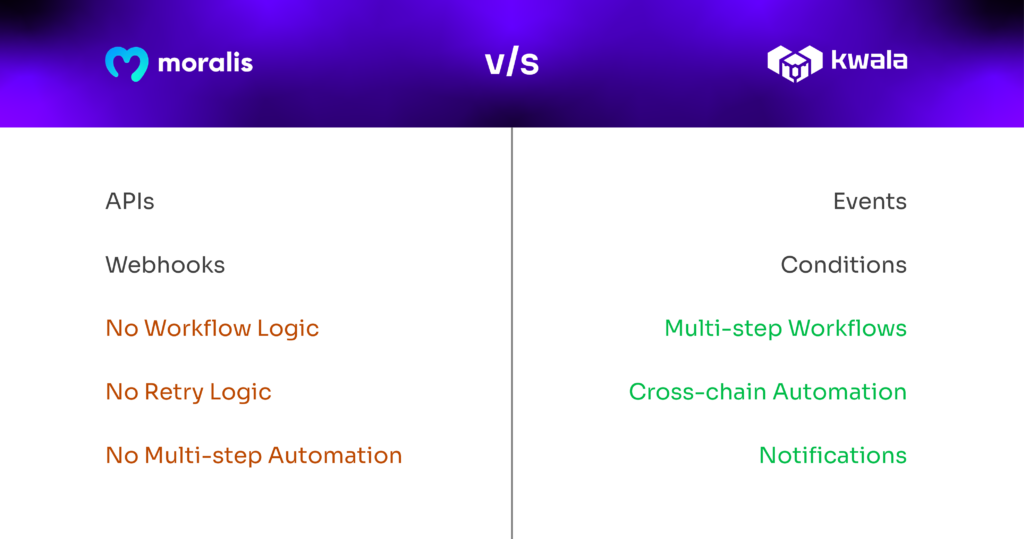
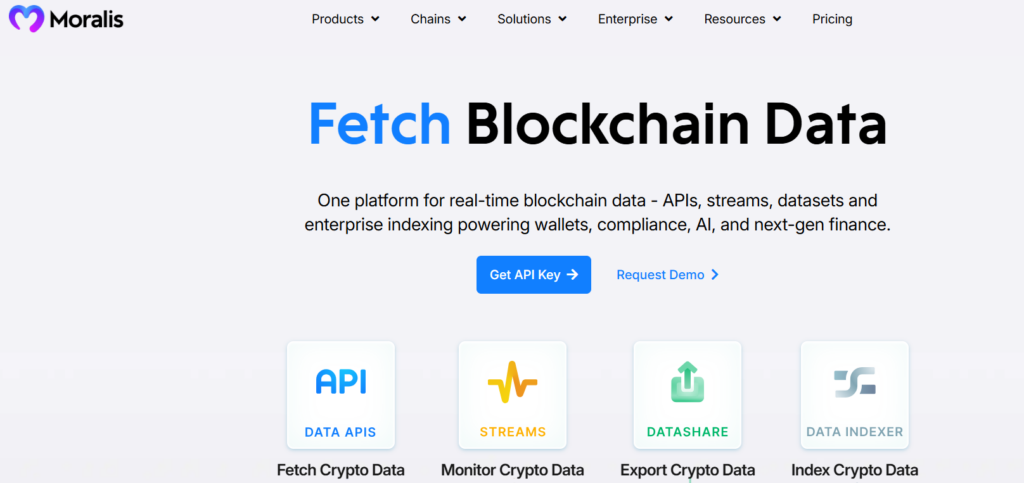
Moralis provides real-time access to blockchain data, but insights alone aren’t enough.
Modern dApps need actions, not just insights: automations, triggers, and workflows that respond to the moment something changes on-chain. This is where Kwala naturally enters the picture. Instead of stopping at data, it turns events into real-time, decentralized workflows that move your app forward.
In this blog, we’ll compare Moralis and Kwala to understand how each fit into the Web3 automation stack, and which one gets you closer to a workflow-ready backend.
How Moralis and Kwala work
Moralis gives you real-time blockchain data. However, knowing what’s happening on-chain isn’t enough.
Web3 systems often need to react instantly. A delay in responding to an event: like a price shift, a governance vote, or a liquidity change – can disrupt user experience or even cause financial loss.
For example, a DAO treasury that must rebalance tokens when prices fluctuate. If the system can only read the change but can’t trigger the rebalance, the DAO faces slippage and missed actions. This is why initiating responses based on blockchain events is critical.
On-chain events can trigger swaps, DAO updates, cross-chain actions, or treasury movements. Off-chain signals like oracle-fed market data, can also drive on-chain logic. These automations follow developer-defined logic written in languages like Solidity or Rust and only work once the scripts are set up and deployed.
Before choosing any platform, it’s important to understand the key features a Web3 workflow automation protocol must offer to avoid scaling or security issues later.
Even simple automation creates impact: Web3 ad-token systems, for example, have shown a 31% boost in brand loyalty. Reward flows like these can become production-ready by automating contributors or bounty payouts through platforms like Kwala.
Moralis vs. Kwala: An in-depth comparison
Now that we know what both tools do, let’s compare them for a better understanding:
| Basis of difference | Moralis | Kwala |
| Core purpose | Web3 technology infrastructure and APIs for dApp development and analytics. | Serverless workflow automation for Web3, eliminating backend complexity. |
| Primary use case | Ideal for projects needing real-time blockchain data (wallets, DeFi, NFTs) and multi-chain API orchestration. | Ideal for developers, DAOs, or teams wanting to automate Web3 workflows (cross-chain triggers, events, trades). |
| Infrastructure type | API-first with backend data hosting and managed sync via Moralis Cloud & Streams. | Fully serverless / backend-free; YAML-based declarative workflows auto-deployed on the Kalp Network. |
| Automation model | Automation via webhooks and blockchain event streams (e.g., balance changes, contract triggers). | No-code / low-code YAML decentralized workflow definitions with chain-agnostic automations |
| Cross-chain compatibility | Native support for Ethereum, Polygon, and Solana. | Cross-chain automations across Ethereum, Base, Avalanche, Polygon, and BNB chain. |
| Scalability | Scalable data handling with caching and RPC node optimization. | Scales via distributed workflow runners; zero DevOps overhead due to no backend. |
| Collaboration tools | Moralis Teams feature allows multi-user development with role management. | Team collaboration via verifiable YAML scripts and reproducible audit trails. |
| AI integration | Minimal; focuses on enriched API responses and transaction labelling | Provides autonomous AI agents, real-time event triggers, and declarative YAML automation to enable intelligent, decentralized, and tamper-proof blockchain interactions. |
| Data focus | Enriched blockchain data (balances, token metadata, DeFi history). | Event-driven data streaming and trigger-based execution (no raw storage layer). |
| Learning curve | Medium; requires API knowledge and basic backend familiarity | Very low; YAML-based, no-code compatible design |
| Pricing | Tier-based pricing: free plan, starter ($49/month), pro ($199/month), and business ($490/month). | Starter plan ($49/month) and custom plan (pay-per-execution workflow pricing) |
| Suitability | Suitable for dApps needing stable backend data sync | Best for rapid automation, backend-free operations, and cross-chain workflow execution |
If you’re also using Thirdweb in your stack, this Thirdweb vs Kwala comparison will help you understand where each tool fits.
Which tool is ideal for a seamless Web3 workflow?
Moralis captures real-time events from multiple chains and sends them straight to your app. However, you’ll still need to handle what happens next, such as sending automated alerts, updating databases, or triggering smart contract actions.
Kwala changes this approach. As the first platform built for end-to-end Web3 workflow automation, it lets you automate these processes seamlessly.
For example, when a user buys an NFT, Kwala updates their dashboard and triggers a reward token on another chain from a single, decentralized workflow. You can also handle recurring monetization byautomating subscription payments using Kwala from the same automation layer.
Instead of writing extra code or setting up servers, it helps you automate the next steps through simple workflows. Here’s how:
No vendor lock-in
Kwala deploys workflows directly on decentralized infrastructure. It keeps execution independent of any centralized backend.
Dual Workflow Modes: Form Builder + YAML Customisation
Kwala lets you build workflows either through a guided, workflow-based interface or fully customizable YAML files.
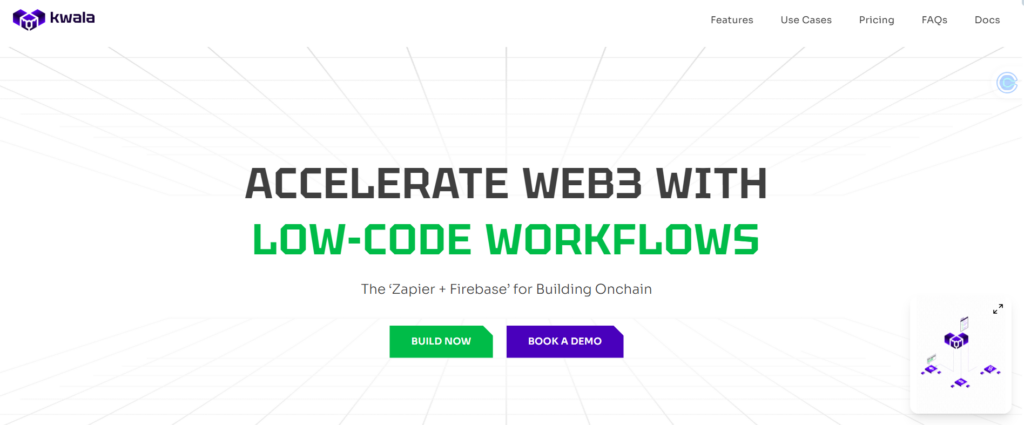
The workflow builder helps you set up triggers and actions quickly, while YAML gives you complete flexibility, transparent logic, and freedom from SDK constraints: ideal for both rapid prototypes and complex, production-grade automations.
No rate limits or compute caps
Its event-driven architecture scales dynamically, eliminating API throttles common in centralized platforms.
Optimized execution with no backend overhead
Kwala executes workflows without a server. It reduces latency and resource dependency while maintaining deterministic on-chain performance.
Beginner-friendly platform
Its low-code approach enables rapid onboarding, letting even non-engineering teams define and deploy automations in under an hour.
Smart automations for smarter dApps
You can get your dApp up and running with Moralis. But once it’s live, the biggest challenge is to keep everything responsive without constant manual intervention.
Kwala simplifies and automates backend tasks that are complex and error prone. Thus, your dApp runs intelligently and scales smoothly as your user base grows.
As you think about scaling your dApp, it may help to see how Kwala handles automation across chains.
FAQs on Moralis vs Kwala
1. What makes Kwala unique in Web3 automation?
Kwala enables fully serverless, YAML-based automation workflows that deploy on-chain without traditional backend dependencies. Its workflows execute on-chain, react to real-time events, and connect Web2 and Web3 systems in a single pipeline. This creates a level of automation flexibility that traditional node-based or webhook systems can’t match.
2. Can Moralis automate blockchain workflows like Kwala?
Yes, but partially only. Moralis automates through event streams and webhooks, whereas Kwala handles the full workflow end-to-end with decentralized execution, multi-chain actions, and no-code orchestration.
3. Which platform is better for rapid prototyping?
Kwala offers faster deployment and no DevOps setup, making it ideal for speed-focused teams. Its YAML workflow format lets developers ship prototypes quickly while still staying production ready.