
 book a call with us
Scaling a Web3 game is rarely about graphics or gameplay mechanics. The real friction begins once players arrive. Every dice roll, point update, NFT upgrade, or reward claim creates on-chain activity that must be monitored, processed, and acted upon in real time. For most teams, this quickly turns into a backend problem: servers, listeners, retries, and […]
Read MoreOptions:
- Event-Driven Web3 Architecture Explains Why Triggers Beat Transactions
- Event-Driven Web3 Architecture Ends the Transaction-First Era
Think about how most Web3 apps still work.
A contract emits an event. Somewhere, a backend checks for it. If the timing is right, something finally happens. If not, things break quietly.
Gaps like these explain why event-driven web3 architecture is gaining attention. With blockchain event triggers, systems respond immediately. On-chain event automation removes the need for constant polling. The result is a real-time blockchain workflow that feels predictable, fast, and intentional.
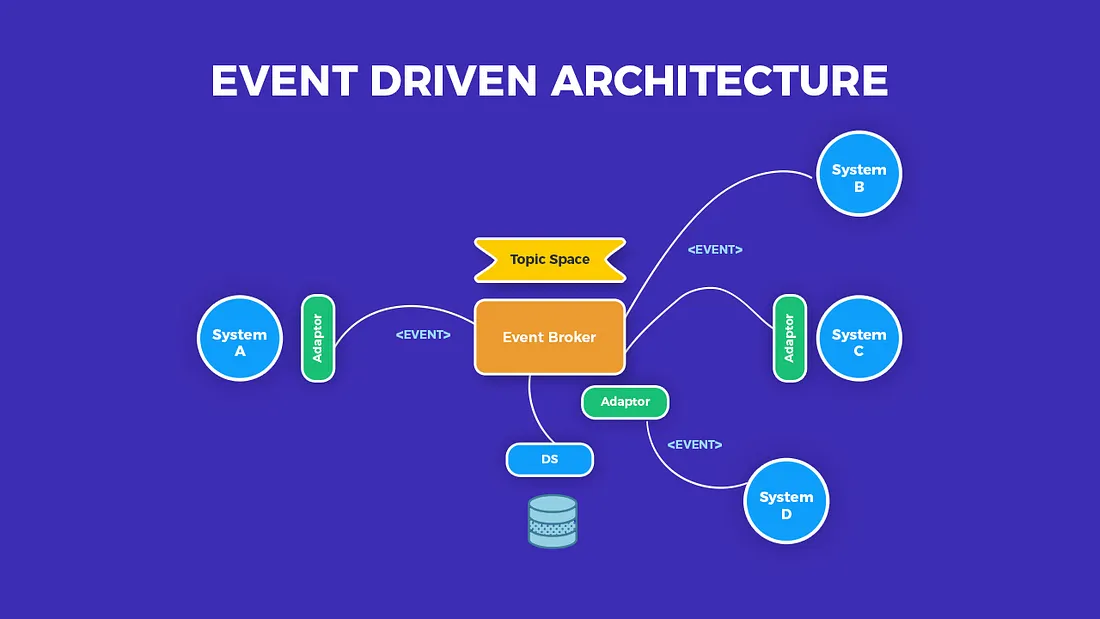
The shift is not theoretical. Across software more broadly, 72% of organizations already use event-driven architecture, and 94% of those plan to expand it after seeing results.
Tools like Kwala exist to support this shift by allowing systems to respond to on-chain events as they occur, without relying on fragile backend glue code.
The sections ahead walk through what event-first design looks like in practice, why triggers matter more than transactions, and how Kwala helps make this model workable.
What is event-driven web3 architecture?
Alternative Titles: Understanding event-driven web3 architecture or What event-driven web3 architecture actually means
An event-first architecture in Web3 means one simple thing: the system reacts when something happens, not after checking ten times to confirm it has.
Instead of polling the blockchain or waiting for a transaction to settle before doing anything, an event-driven Web3 architecture listens for signals as they’re emitted. When a smart contract logs an event, something downstream responds.
Those blockchain event triggers might be on-chain, such as a token transfer, a DAO vote passing, or a liquidation firing. They can also originate from off-chain sources, such as price updates or risk flags, which then trigger on-chain event automation.
This approach keeps the Web3 backend architecture straightforward. Fewer polling loops. Fewer workarounds. And workflows that move as the chain moves. For apps where timing is crucial, this is what makes them effective.
Why triggers are more important than transactions
Alternative Titles: What triggers solve that transactions cannot or Why triggers work better than transactions
Most Web3 systems still obsess over transactions. Who sent what, which block it landed in, and whether it confirmed. That’s useful, but it’s also late.
Triggers are about reacting while things are happening, not after the fact. Here’s how that plays out in practice.
1. Real-time responsiveness
Polling means you’re always catching up. You ask the chain what changed, get an answer, then ask again.
With blockchain event triggers, the chain does the talking. The moment a contract emits an event, your logic wakes up. There’s absolutely zero waiting. Tools like Gelato Web3 Functions lean into this by running code as soon as an event fires, not minutes later when a check finally runs.
2. Lower infrastructure overhead
Constant polling is like refreshing a page that almost never updates. Every refresh costs money.
An event-driven Web3 architecture doesn’t do that. Nothing runs until there’s a reason to run. One listener can sit quietly and then handle a flood of activity when it matters, without spamming RPCs or burning compute just to hear “nothing new.”
3. Better scalability and modularity
When everything is interconnected through transactions, a single slow piece can block the rest. Events avoid that.
A contract emits something. Multiple systems can react, or ignore it, independently. That’s why Web3 backend architecture built around events tends to age better: adding new behavior doesn’t mean touching old logic or risking breakage elsewhere.
4. More accurate context
A transaction says something happened. An event explains what that something means.
A ProposalPassed event, for example, informs you of what happened and why it matters, right when it occurs. That context can trigger cross-chain actions, alerts, or checks across real-time blockchain workflows. With transaction-only designs, that nuance usually shows up late or not at all.
Event-first architecture in action: real web3 examples
Alternative Titles: Real-world examples of event-first web3 systems OR What event-first architecture looks like in practice
Here’s how event-driven web3 architecture is actually being used:
- DAO automation: Once voting conditions are met, actions like fund releases or permission updates run immediately and move across chains without manual steps.
- DeFi risk controls: Risk signals fire the moment thresholds are crossed, letting protocols react while positions are still recoverable.
- Compliance workflows: Changes in wallet status or policy rules can halt activity instantly, before anything slips through.
This is what changes when systems react instead of rechecking.
Kwala – The solution for event-first web3 workflows
Alternative Titles: Where Kwala fits in event-first web3 architecture OR Kwala as the missing layer in event-first web3
Kwala exemplifies the event-first philosophy by offering a reactive execution layer that listens directly to blockchain events and executes event-driven workflows in real time. Instead of polling or depending on oracles, Kwala nodes capture verified events at the block level and trigger declarative policies written in YAML.
This has several immediate advantages:
- Instant execution: When an event occurs (e.g., a proposal passes or a transaction meets compliance criteria), Kwala triggers logic without backend scripts.
- Declarative workflows: Developers define triggers and actions in simple YAML files, thereby avoiding the need for complex backend infrastructure.
- Cross-chain reactions: Events on one chain can automatically trigger actions on another, enabling complex multi-chain coordination.
Kwala shows what happens when blockchain event triggers sit at the core of web3 backend architecture. Execution follows context, and real-time blockchain workflows fall into place.
Triggers are how web3 finally moves in real time
Alternative Titles: Web3 is learning to react, not just record OR The direction web3 architecture is taking
Transaction polling still has its place, especially when you’re looking backward. But when systems need to act as things happen, blockchain event triggers do the heavy lifting.
As more teams move toward Web3 architecture, event-driven automation becomes simpler, cross-chain logic stops feeling fragile, and real-time blockchain workflows stop depending on layers of glue code. That’s what makes on-chain event automation usable at scale.
This is the direction the ecosystem is already drifting in, and where platforms like Kwala fit in naturally.