
 book a call with us
Struggling to write recurring codes for Web3 subscription payments? With the Web3 payment solutions market expected to grow at a CAGR of 28.5% between 2024 and 2032, subscription payments are a non-negotiable feature. Asking users to renew every month manually is a slow path to attrition. However, your decentralized finance (DeFi) protocol lacks the autonomous, recurring ‘push’ […]
Read MoreWhat if you could eliminate the information delay between your decentralized finance (DeFi) protocol and your community’s Discord command center?
When running a Decentralized Autonomous Organization (DAO), managing a high-stakes Web3 community, or tracking a DeFi protocol, timely information is critical.
A token transfer, a governance proposal submission, or a smart contract event can execute in a second, but that important event often remains trapped on the blockchain, creating a blind spot for your team.
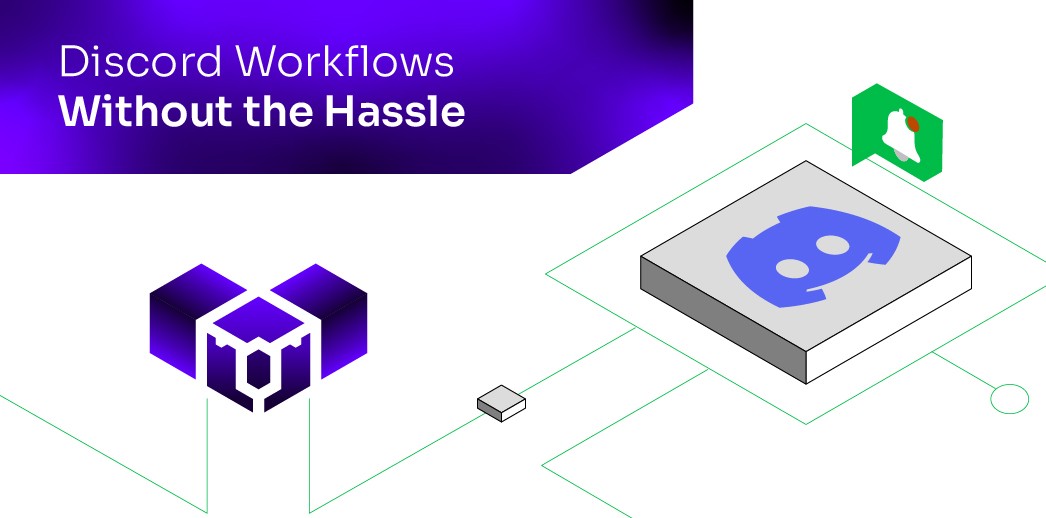
This blog post offers a powerful solution to this disconnect. We discuss how a decentralized backend partner like Kwala uses no-code workflow automation to connect the Web3 backend directly to your Discord server to provide real-time updates.
Decouple your backend with low-code automation
The core problem in Web3 development is synchronization. Every decentralized application runs on a continuous stream of on-chain events, from new NFT mints to finalized governance proposals.
However, accessing and reacting to this critical data demands manual effort, unnecessary friction, and high costs.
For a developer, this means wasting valuable time writing backend scripts to fire a simple notification when a smart contract function executes.
This is how the traditional backend becomes a bottleneck. The solution lies in an event-driven automation layer that actively monitors the chain and runs complex logic without manual intervention.
- Traditional backend: static, custom-coded, high-cost operational cycle
- Decentralized backend: dynamic, automated without any code, low-cost outcome-focused engine
With Kwala, your backend becomes both event-driven and integration-ready. It processes smart contract events, hits Web2 APIs, manages conditional logic, and dispatches updates to tools like Discord: cutting down development time, reducing infra overhead, and giving you automation that would normally require complex engineering.
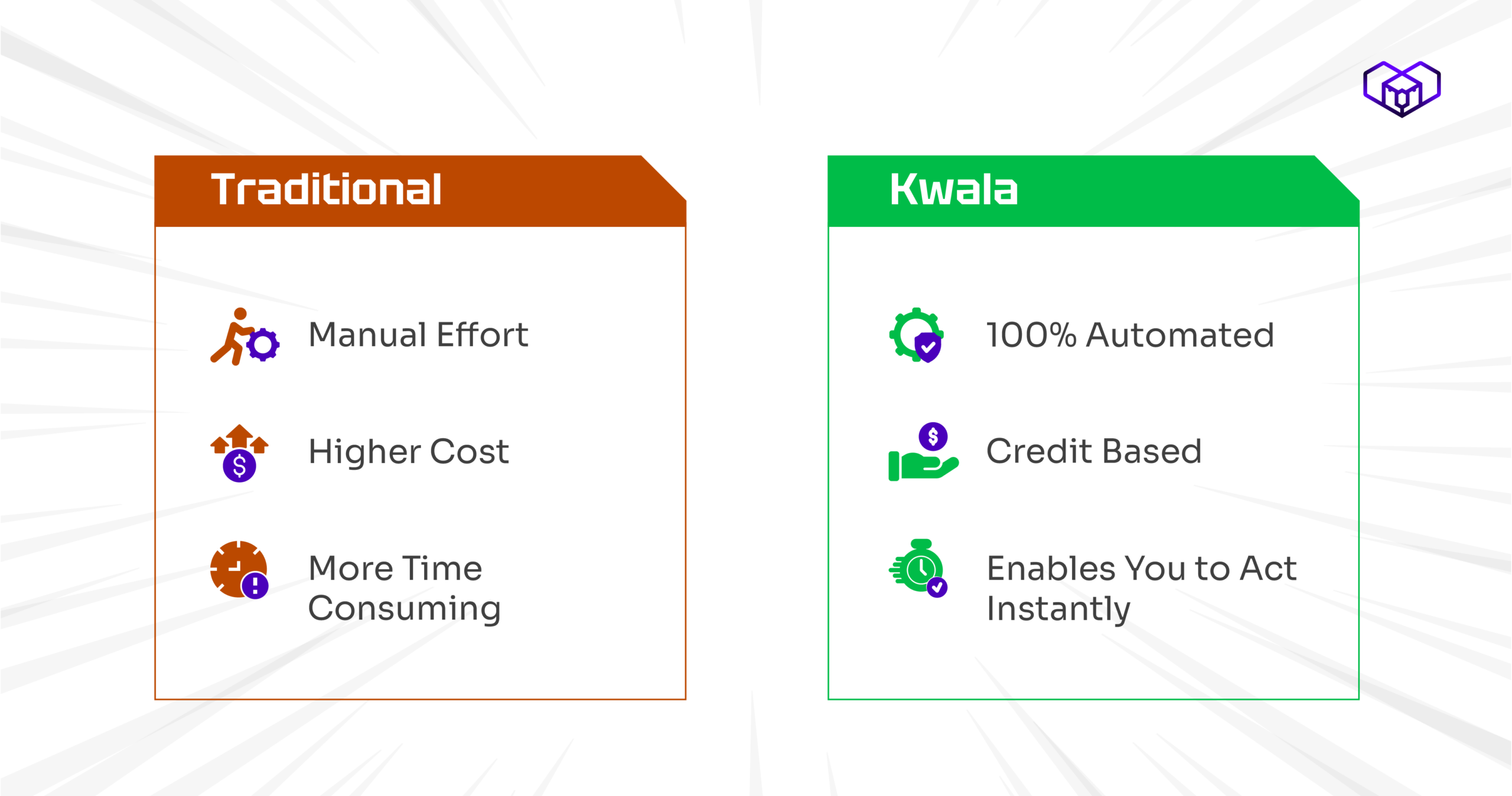
Three benefits of no-code automation over traditional backend scripts
A decentralized application (DApp) consists of the blockchain, the frontend, and the backend. Kwala operates as an invisible executor in the backend, allowing developers to orchestrate entire multi-step workflows with minimal code. We remove the overhead of custom scripting by providing a decentralized, pay-as-you-go automation model.
This means you bypass the overhead of traditional methods:
1. Speed over scraping: Instead of writing custom indexers and polling APIs, you use a simple YAML structure to instantly define what to listen for on-chain.
2. Decentralized logic over centralized dependence: Your automation logic runs on a decentralized network, ensuring no vendor lock-in and a strong execution layer.
3. Workflow automation over code clutter: You don’t just get a notification; you define a multi-step outcome. You sync Web3 events to a Discord alert, trigger a human-gated approval via a reaction, and execute a final contract call, all within one defined workflow. This results in an event-driven dApp that connects Web3 and Web2 networks without heavy custom code.
Integration guide: get Discord updates in 4 simple steps
Kwala enables you to integrate Discord with your smart contracts for unhindered on-chain notifications. The process is precise, confident, and focuses on dynamic outcomes.
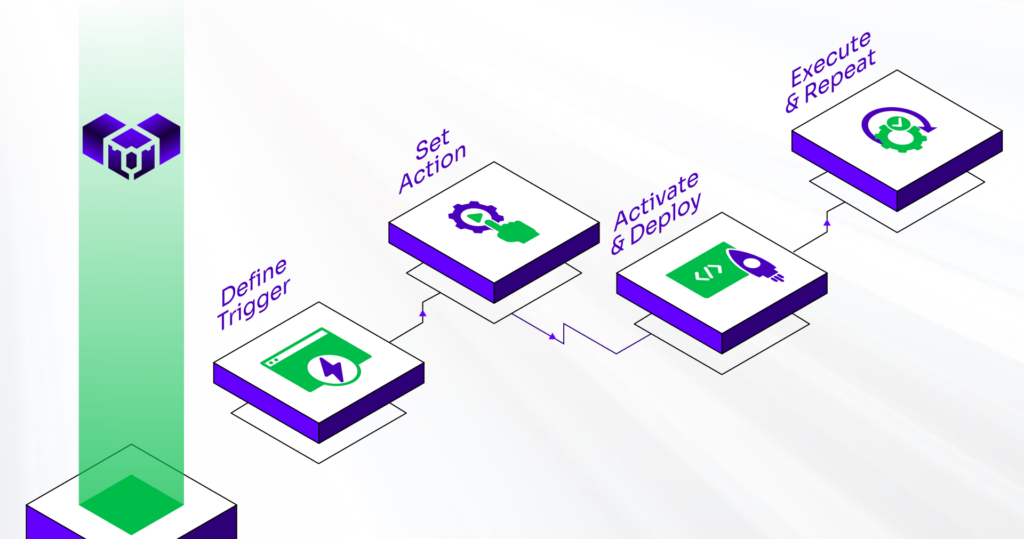
Step 1: Define the trigger
You define an on-chain trigger, telling the engine to listen for a specific event (e.g., a Mint event) on a designated smart contract and blockchain network.
Step 2: Set the action (Web2 API call)
In the actions section, you configure an external API call. Since the protocol supports standard Web2 APIs, you define an http_post action pointing to your Discord Webhook URL. You can add your own message text and formatting parameters here. Kwala sends the event data to your endpoint, but the structure of the Discord message is fully in your control.
Step 3: Activate and deploy
With the logic defined, you deploy and activate the workflow. This registers the script on the network’s decentralized execution layer.
Step 4: Execute and repeat
Kwala immediately begins to listen and react. Your wallet is charged only with execution credits when the logic triggers and executes, an example of pure pay-as-you-go efficiency.
Turn Discord into your new dApp dashboard
In Web3, the hardest part isn’t watching the chain; it’s keeping up with it. Developers juggle nonstop events, multi-chain activity, governance updates, API syncs, and security-sensitive triggers. Missing even one critical signal can slow down a DAO, stall a protocol, or break user trust.
Traditional backends make this harder: you maintain servers, write custom listeners, patch scripts, and hope nothing slips through.
Kwala changes this foundation.
Its agent-driven backend listens for the events that matter, understands what to do with them, and executes the logic instantly: across chains or straight into tools like Discord.
- Pay-as-you-go execution keeps high-frequency monitoring affordable
- Workflow automation compresses hours of backend work into a single configuration
- Decentralized design removes vendor dependence and preserves autonomy
The result is a backend that doesn’t wait for instructions; it acts.
Your dApp becomes faster, more responsive, and far easier to maintain.
From idea to execution, no backend in your way. Explore Kwala’s decentralized backend today!
FAQs
1. Is there a risk of Kwala exposing my private keys when automating on-chain actions?
No. Kwala uses a non-custodial, credit-based execution model, so your private keys are never shared with, stored by, or managed by the protocol.
2. Does using Kwala restrict my dApp to a single blockchain network?
No, Kwala is designed to be multi-chain, allowing one script to monitor an event on one chain and trigger a subsequent action on a completely different network.
3. How does Kwala secure its workflows against decentralized network failures or exploits?
Kwala runs on a decentralized execution network, removing single points of failure. Each workflow passes through validation checks to ensure that actions execute exactly as defined, without silent breaks or unintended behavior.