
 book a call with us
Every Web3 developer knows the struggle. You start with an exciting idea, then spend days fighting RPC errors, testnet tokens, and endless on-chain configs. The vision is clear, but the setup? A nightmare. But there’s a solution to this. Ethereum on-chain! It’s the foundation of the decentralized internet – powerful, secure, and backed by the largest blockchain community. But here’s the catch: building efficiently on Ethereum still takes time. Kwala changes that. […]
Read MoreIf you’re trying to build your first dApp, you’ve probably hit the same wall – endless setup, confusing tools, and too many moving parts. Even with all the progress in Web3, launching something stable still feels harder than it should.
That’s why more developers are turning to the Avalanche Blockchain. It’s fast, low-cost, and designed for real scalability. With subnets, near-instant finality, and full EVM compatibility, Avalanche lets builders move beyond slow test environments to production-ready ecosystems in record time.
So, if your goal is to move from idea to launch without drowning in dev setup, let’s break down how to build on Avalanche, and where Kwala fits in to simplify the process.
Why choose Avalanche?
Every blockchain promises speed and scalability, but few actually deliver it at scale. The Avalanche Blockchain stands out because it solves what most developers still struggle with: building high-performance Web3 apps that stay truly decentralized without sky-high gas fees.
Here’s what makes Avalanche a builder’s go-to chain:
- Powerful architecture: A Layer-1 network with subnets that process transactions in parallel, enabling massive throughput and near-instant finality.
- Low-cost and efficient: Avalanche keeps gas fees minimal while maintaining lightning-fast transaction confirmation making it ideal for apps handling large user volumes.
- EVM-compatible: Fully compatible with the Ethereum Virtual Machine, allowing smooth migration of smart contracts, tools, and developer environments.
- Customizable subnets: Developers can create isolated, configurable networks tuned for speed, governance, or compliance.
- Broad use cases: From DeFi ecosystems and NFT platforms to enterprise tokenization – Avalanche powers some of the most advanced on-chain applications today.
But even with these strengths, the backend work, automation, triggers, and integrations still take time. Exactly, where protocols like Kwala bring no-code workflow automation, helping you manage it all seamlessly.
What KWALA adds to your Avalanche stack
KWALA can do a lot for your Avalanche stack, adding automation, flexibility, and power behind every build.
It listens to on-chain events, reacts to them in real time, and executes logic instantly, similar to how you can automate real-time USDC alerts with Kwala across chains.
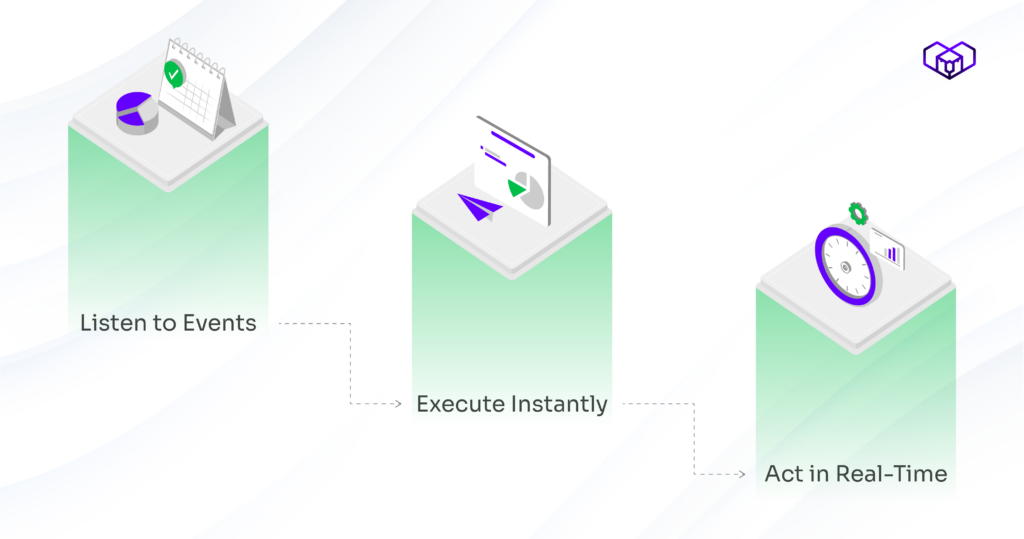
Here’s exactly what it does:
- Decentralized backend: Powers your Web3 applications with an autonomous backend that listens to on-chain events and executes logic instantly.
- No code workflow automation: Build and deploy automated actions without setting up servers – define your flow, and KWALA runs it.
- Cross-chain and Web2 connectivity: Orchestrate Web3 events on Avalanche while triggering APIs, databases, or tools in the Web2 world or even automate subscription verification for content platforms.
- Pay-as-you-go, credit-based model: Scale without waste by paying only for the automation you actually use.
- No vendor lock-in: Maintain full control of your workflows with an open, exportable setup that aligns with Avalanche’s decentralized ethos.
- Agentic execution: “KWALA listens. KWALA reacts. KWALA builds.” It works in the background, handling automation so you can focus on building.
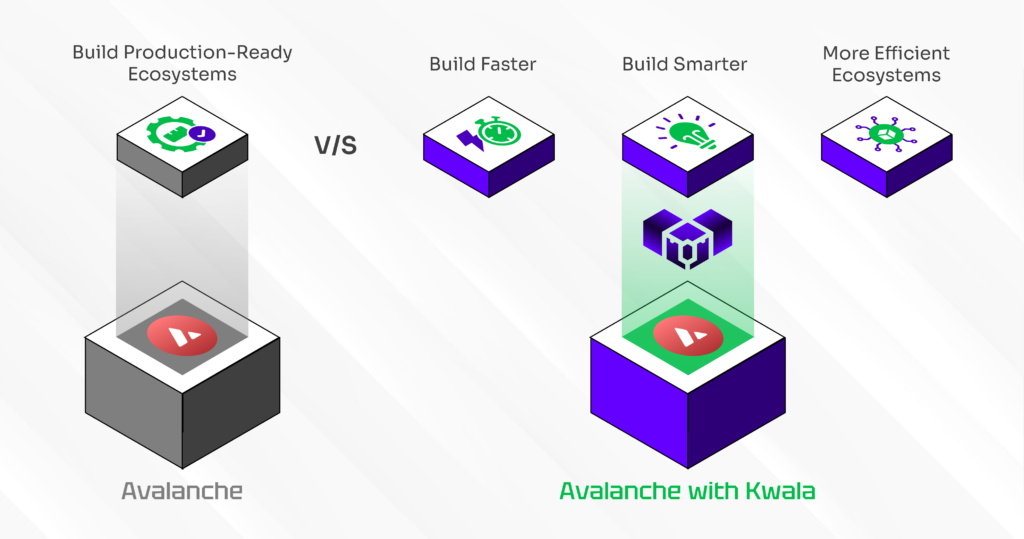
Together, Avalanche and KWALA create a faster, smarter, and more efficient development stack letting you launch in days, not months.
Supported chains (and why it matters for Avalanche builders)
Building on the Avalanche Blockchain is powerful but developers rarely stay confined to one network. KWALA expands that reach with multi-chain support built for today’s Web3 ecosystem.
Here’s what it offers:
- Works seamlessly across decentralized networks like Ethereum, Polygon, and Avalanche.
- Enables no code workflow automation for cross-chain actions.
- Reacts to on-chain events on Avalanche and triggers logic on other chains.
- Syncs Web3 and Web2 systems without custom backend builds.
- Supports both testnet and mainnet environments, including Avalanche Fuji.
Your workflows stay fluid, automated, and ready to scale across ecosystems.
How to build on the Avalanche blockchain (Testnet → Mainnet)
If you’ve been wondering how to build on the Avalanche blockchain, here’s your shortcut. This step-by-step path takes you from testing on Fuji to launching on mainnet and with KWALA, setting up automation becomes effortless.
Let’s take a look:
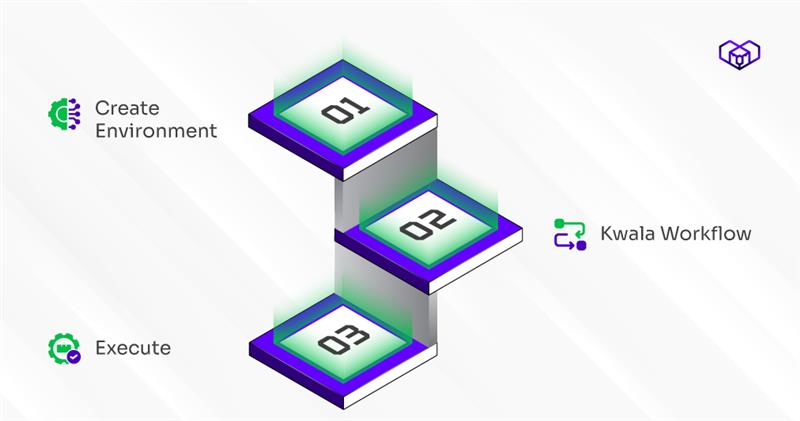
1. Prepare your Avalanche environment
- Add the Avalanche C-Chain to your wallet using the Explorer or Chainlist.
- Choose your preferred dev stack: Foundry, Hardhat, or Remix all work smoothly.
- For test runs, use Fuji Testnet. Grab your RPC endpoint, claim tokens from the faucet, deploy smart contracts, and verify them through the Avalanche Builder Hub.
2. Draft your KWALA workflow (Fuji first)
- Define your workflow in KWALA using simple YAML with no complex coding needed.
- Add a trigger (e.g., a Purchase() event on your Fuji contract) – or even create token price-based notifications that alert users when thresholds are hit.
- Include conditions like KYC checks or token amount thresholds.
- Configure actions – call another Avalanche contract, send a Discord alert, or mint on another EVM chain.
- Deploy it through KWALA’s no code workflow automation dashboard and test logs, retries, and end-to-end flow on Fuji.
3. Promote to Mainnet
- Switch your YAML workflow target from Fuji to Avalanche mainnet.
- Monitor runtime metrics, verify on-chain audits, and maintain a rollback plan for safety.
Pro tip: If your flow spans chains, specify extra actions in the same YAML. KWALA’s engine coordinates sequence and signing so you don’t glue AWS Lambdas together.
Avalanche blockchain + KWALA = Ship day, not someday
Building on the Avalanche Blockchain gets easier when your process is structured. Start small, test often, and treat every build as an evolving system.
Use the Fuji testnet to perfect your contracts, monitor gas fees, and identify cross-chain risks early. When you move to mainnet, keep your structure modular and your data auditable.
Also, where KWALA becomes indispensable. It gives your decentralized setup the flexibility of no code workflow automation, turning on-chain events into orchestrated actions across Web3 and Web2.
The result is a stack that builds faster, scales cleaner, and stays effortless.
Your Avalanche build deserves a smarter backend – try KWALA today!
FAQs on Avalanche blockchain
Is Avalanche a good blockchain?
Yes. The Avalanche Blockchain is one of the fastest and most decentralized networks in Web3, offering low fees, near-instant transactions, and strong developer support for dApps and smart contracts.
Is AVAX better than Solana?
Solana is faster, but Avalanche is more decentralized and safer for on-chain operations across Web3 projects.
Which is the fastest blockchain?
ICP currently records the highest real-time TPS. Still, the Avalanche Blockchain ranks among the fastest Web3 networks with instant finality and no code integration for automated workflows.