
 book a call with us
Is the gap between an on-chain event and the moment you hear about it sabotaging your dApp? You’re not the only one wondering. Developers often feel that pit in their stomach because a single missed alert can mean a failed liquidation, delayed governance action, lost funds, or a stalled user experience. In Web3, timing isn’t a feature; it’s survival. And yet, most teams still work […]
Read MoreBNB keeps the on-chain work smooth, though the backend is where the complexity really starts to appear.
The moment you need your dApp to react, to trigger a workflow, call an API, or send a transaction – everything slows down. You end up juggling scripts, maintaining servers, and babysitting cron jobs that keep breaking.
What if your backend could listen to every BNB event, react instantly, and execute outcomes automatically?
That’s where Kwala steps in. Read ahead to learn how it keeps your backend in sync.
BNB gives you the foundation, Kwala gives you the flow
BNB Smart Chain (BSC) has made blockchain development accessible to millions. It’s fast, cost-efficient, and home to some of the largest dApps in DeFi and gaming.
However, building on BNB doesn’t end when your smart contract deploys. It starts there.
Every event your contract emits, from swaps to user registrations, needs a backend to listen, process, and trigger outcomes. That’s where most developers hit a wall.
You can’t afford endless backend maintenance. You need something that scales with your app: without you constantly managing it.
BNB gives you the power to build. Scaling those builds takes a backend that acts as fast as your chain.
Kwala does exactly that. It automates event-driven execution, connecting on-chain activity to off-chain outcomes: securely, instantly, and without vendor lock-in.
Kwala: the backend that executes for you
Kwala isn’t just a tool; it’s the missing automation layer of Web3. It’s built on the principles of a Web3 workflow automation protocol, enabling developers to react to events in real time across chains.
When your BNB contract emits an event, Kwala detects it, processes it, and triggers your chosen outcome, without writing new code each time.
Think of it as your decentralized executor, quietly handling everything that happens after the transaction.
Here’s what sets Kwala apart:
- Event-driven orchestration: Kwala detects on-chain activity, like swaps, transfers, or approvals, and triggers corresponding workflows automatically.
- Web2 + Web3 integration: It connects BNB logic directly with APIs, CRMs, or notification tools.
- No vendor lock-in: Built on a decentralized orchestrator, you only pay for what you run.
- No-code automation: Developers define triggers and actions visually; Kwala handles the backend logic.
- Pay-as-you-go: You only pay for what you automate.
From simple triggers to complex multi-chain logic, Kwala turns backend bottlenecks into seamless execution.
BNB meets Kwala: real-world developer scenarios
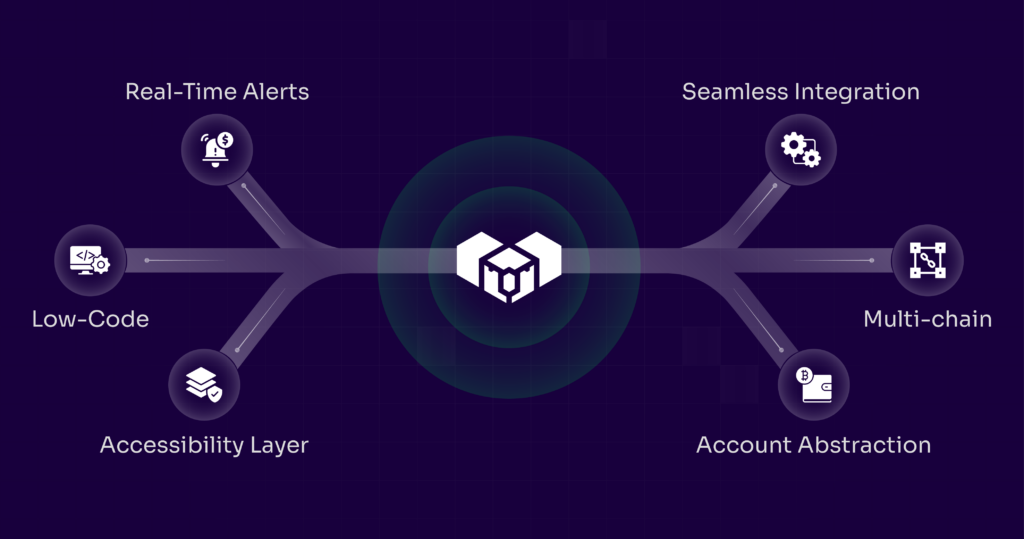
Here’s what happens when automation meets scalability.
1. Real-time transaction alerts
Every time your smart contract emits an event, Kwala listens and reacts instantly.
For instance, when a token is transferred, Kwala can send a notification to your users through Telegram, Slack, or Discord, without manual code or cron jobs.
The result: real-time awareness, no backend delays.
2. Automated token distribution
Handling airdrops or staking rewards often involves repetitive coding and manual verification.
With Kwala, you can set clear conditions – “If wallet stakes X, send Y tokens”, and let automation do the rest – similar to automated token distribution or bounty payouts.
No rewrites, no re-deploys, no human error.
It doesn’t just run the function; it orchestrates the entire logic, from trigger to fulfillment.
3. Web2 integration without middleware
Why stop at blockchain triggers?
Kwala connects your BNB smart contracts with Web2 tools: CRMs, dashboards, or spreadsheets, so actions on-chain can instantly update data, send alerts, or trigger workflows.
It’s where decentralized logic and everyday applications finally sync in real time.
Integrating BNB with Kwala
If you’ve built on BNB, you already know the post-deployment struggle, your contract works fine, but connecting it to a responsive backend feels endless.
You write listeners, handle RPCs, maintain servers, and still face delays in event execution.
That’s the hidden weight of blockchain development: your logic is decentralized, but your backend isn’t.
Kwala changes that.
It listens to your smart contract events on BNB and automates every downstream action – notifications, API calls, data updates, even multi-chain triggers – through a no-code, decentralized interface.
You don’t rewrite your contract. You simply connect and orchestrate.
Here’s how you can integrate your BNB project with Kwala in a few clear steps:
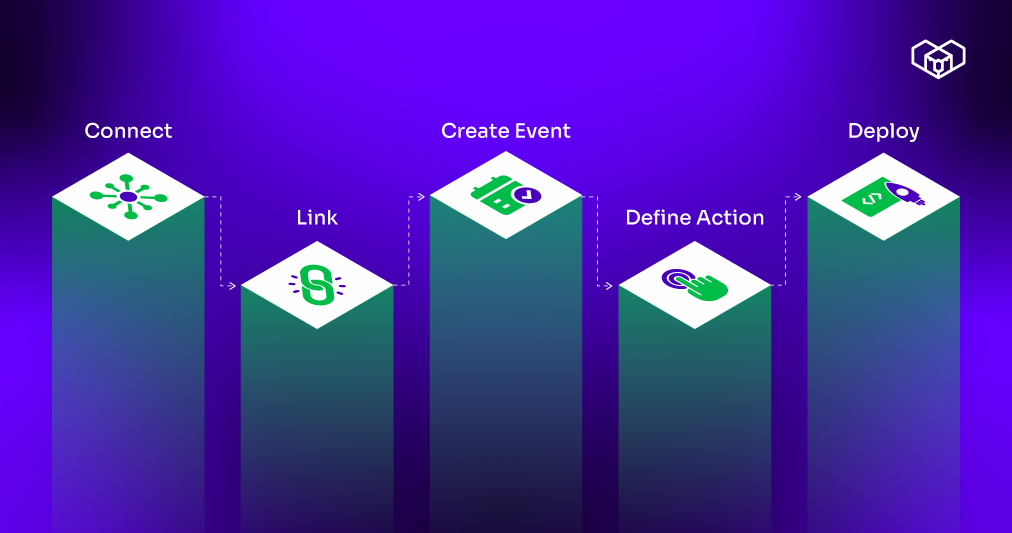
Step 1: Connect your BNB network
Select BNB Chain from Kwala’s supported networks.
Kwala connects via secure RPC endpoints, allowing real-time event listening without manual polling or scripts.
Step 2: Link your smart contract
Enter your contract address on the dashboard.
Kwala automatically fetches ABI details, mapping event names and parameters for quick setup.
Step 3: Define event triggers
Choose which on-chain events Kwala should monitor: transfers, swaps, or any custom event from your smart contract. Once selected, Kwala begins listening to them continuously.
Step 4: Set your actions
For every trigger, define what happens next: send an API call, push a notification, or start another workflow.
These actions can target both Web2 and Web3 endpoints, without middleware.
Step 5: Activate and monitor
Once deployed, Kwala executes your workflows automatically.
Monitor results in real time through the dashboard: event logs, success states, and triggered actions.
From setup to execution, you don’t manage a single server or write a new listener. Kwala handles the orchestration behind every BNB event, so your backend stays as fast, secure, and dynamic as your chain.
Check how Kwala automates Web3 workflows: fast, smart, and seamlessly.
What makes Kwala different
BNB developers often depend on centralized servers and manual triggers: setups that strain as projects grow.
Kwala replaces static backend infrastructure with decentralized, dynamic orchestration. Instead of you running code, Kwala executes event flows directly on a distributed network.
| Feature | Typical backend | Kwala |
| Event handling | Manual triggers and polling | Automated event listening |
| API calls | Hardcoded, centralized | No-code orchestration |
| Scalability | Limited to hosted servers | Distributed and decentralized |
| Vendor lock-in | Common | None |
| Cost model | Fixed subscription | Pay-as-you-go credits |
For BNB developers, this difference is massive. It means less time wiring backend logic and more time shipping features that matter.
Build smarter, build on BNB with Kwala
BNB gives you the foundation.
Kwala gives you the no-code Web3 automation engine that never stops listening.
From on-chain triggers to off-chain outcomes, Kwala keeps your BNB backend alive: dynamic, decentralized, and fully responsive.
So the next time you deploy on BNB, don’t just build your app. Build your automation. Build with Kwala.
FAQS on build on BNB
1. Can Kwala handle cross-chain workflows beyond BNB?
Yes, Kwala supports multi-chain orchestration, allowing developers to trigger actions across other networks or Web2 systems from BNB events. This makes it easy to build cross-network logic without extra backend setup.
2. How is Kwala different from services like Gelato or Moralis?
Kwala offers decentralized, no-code orchestration: automating workflows natively instead of relying on SDKs or centralized API layers.
3. What kind of events can Kwala listen to on BNB?
Any smart-contract event, such as transfers, approvals, swaps, or staking triggers, can initiate automated workflows using Kwala’s event-driven architecture.