
 book a call with us
Ever had a user wait hours to get locked out because their NFT subscription wasn’t verified in time? In Web3, even a few-second delay can make a big difference. Hence, manual checks won’t keep up. Though there are existing tools that promise to help, most of them add layers of technical complexity. As a result, you end up juggling scripts, backend […]
Read MoreYour smart contract mints an NFT on Polygon. The transaction confirms. Now you need to update your database, send the user a confirmation email, notify your Discord community, and trigger a treasury rebalancing workflow on Ethereum.
Most developers write custom backend code for this – Node.js scripts with event listeners, database connections, API calls, error handling, and retry logic. This works until you need to add another workflow, modify the existing one, or debug why the Discord notification failed silently three days ago.
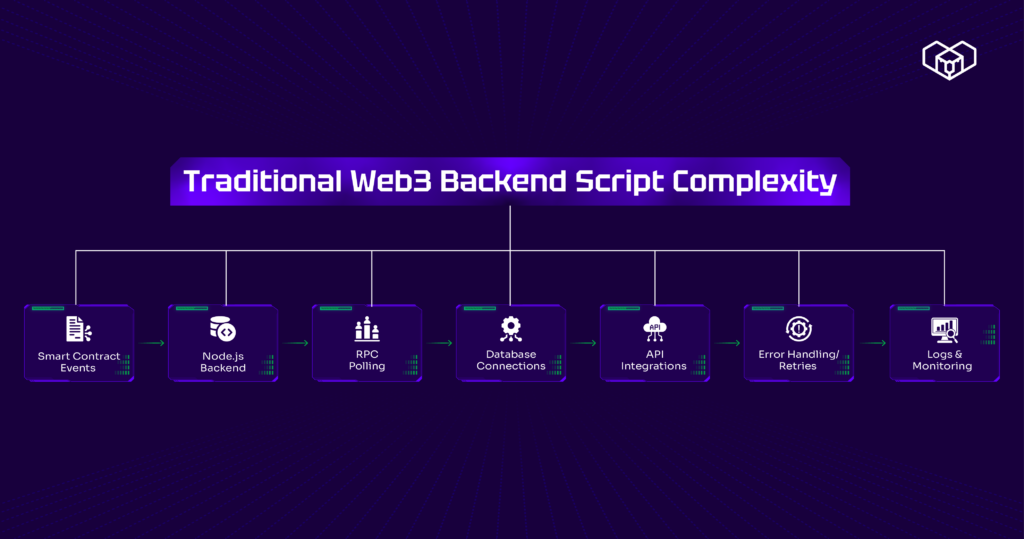
Backend logic for Web3 apps shouldn’t require maintaining servers, writing boilerplate code, or debugging infrastructure failures. Kwala’s Web3 workflow engine lets developers define complex multi-step logic through declarative workflows that execute reliably without traditional backend infrastructure.
This piece walks through how developers build and manage backend logic using workflows instead of custom scripts.
Why backend scripts become operational debt
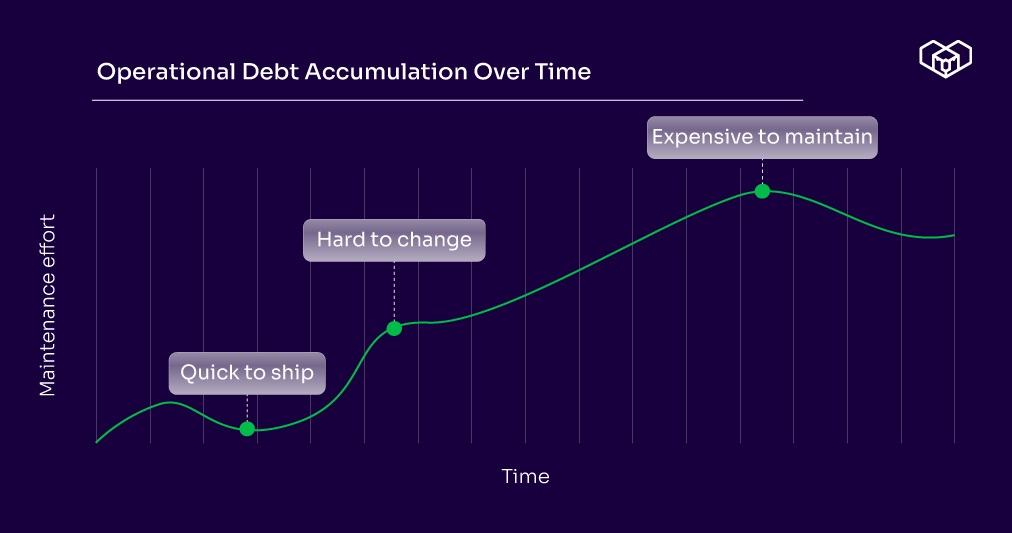
Traditional Web3 backend development follows a predictable pattern. You write a script that listens to blockchain events, processes the data, calls external APIs, and executes follow-up actions. The first version works in a few hours. Maintaining it becomes a permanent job.
The friction compounds across three dimensions:
- Infrastructure overhead: Your script needs a server running continuously, handling crashes, managing dependencies, and ensuring uptime during critical periods
- Logic fragility: Business logic lives scattered across multiple files. Changing one workflow means hunting through code, testing edge cases, and hoping you didn’t break something else
- Debugging opacity: When workflows fail, you’re parsing logs, checking database states, and reconstructing what happened from incomplete traces
Developers spend more time maintaining backend infrastructure than building protocol features. Setting up real-time blockchain monitoring requires constant attention to servers and polling logic that adds no product value.
How workflow-based logic eliminates infrastructure burden
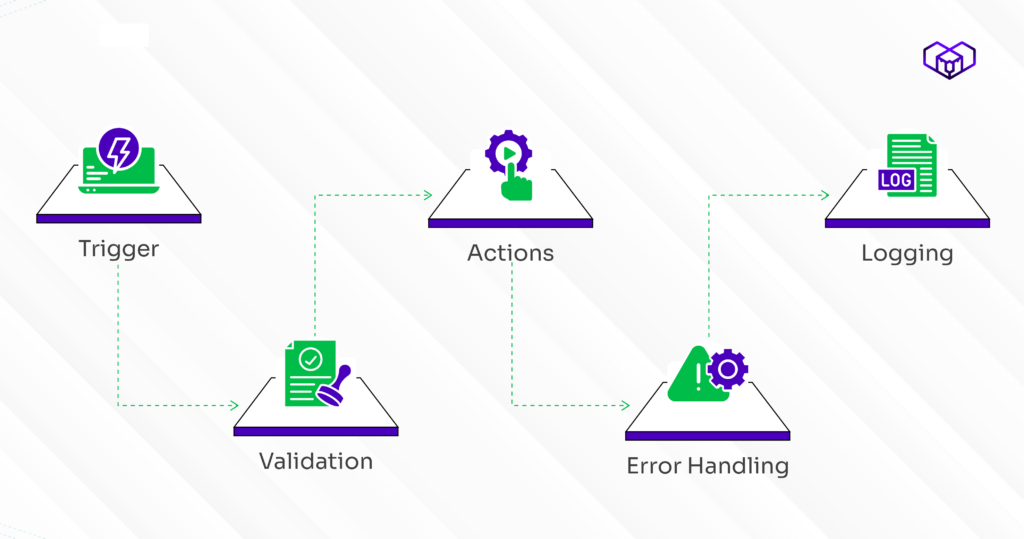
A Web3 backend without coding traditional scripts means defining logic as workflows. That includes declarative structures that specify triggers, actions, and execution order without managing the underlying infrastructure.
Kwala’s approach centers on event-driven workflows where you define:
The trigger: What on-chain event initiates the workflow
- NFT mint on a specific contract
- Token transfer above a threshold
- Governance proposal reaching quorum
The logic sequence: What happens next, in order
- Validate transaction details
- Update off-chain database
- Send user notifications
- Execute follow-up on-chain actions
The execution guarantees: How failures are handled
- Automatic retry with exponential backoff
- Transparent on-chain logging
- Configurable alert mechanisms
This declarative model shifts complexity from your codebase to the execution layer. You specify what should happen; the blockchain backend automation system handles how it happens reliably.
Building multi-step workflows without server maintenance
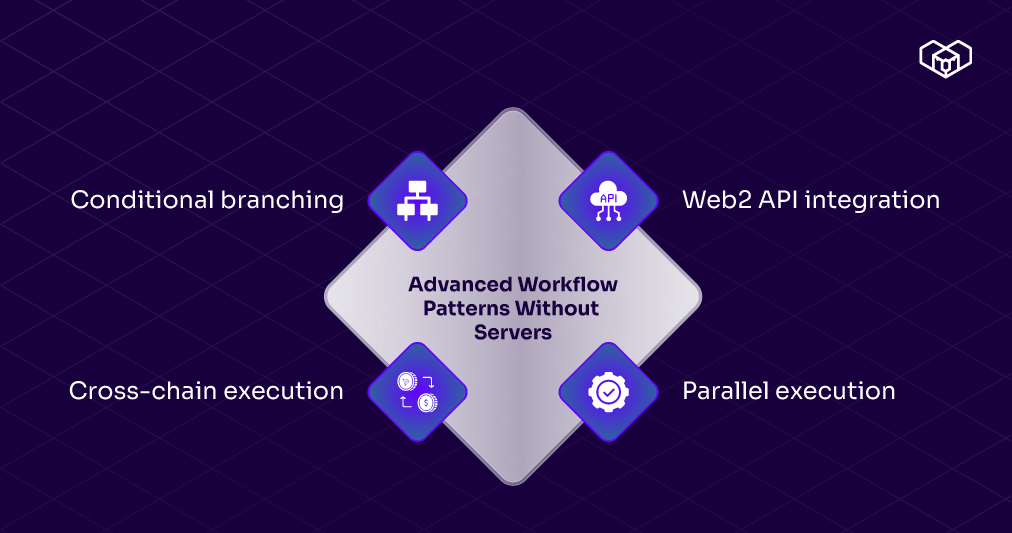
The workflow engine supports complex logic patterns that traditionally require extensive custom code:
Conditional branching based on event data: Monitor a token swap and trigger different actions depending on swap size. Small swaps update analytics dashboards, large swaps alert the treasury team and execute rebalancing logic.
Cross-chain coordination without infrastructure duplication: One workflow monitors an Ethereum event and triggers sequential actions on Polygon and Arbitrum. No separate monitoring infrastructure per chain, no coordination logic to maintain.
Web2 integration without API wrapper code: Call external APIs directly from workflow definitions, send emails, update CRMs, trigger webhooks, without writing integration code or managing API credentials in your stack.
Parallel execution for time-sensitive operations: Execute multiple independent actions simultaneously when a single event fires, ensuring notifications and database updates happen concurrently rather than sequentially.
Example workflow: Your DAO proposal reaches quorum. The workflow validates the vote count, updates your governance dashboard, sends notifications to Discord and email subscribers, logs the result to your analytics database, and initiates the execution phase on-chain. The best is that all of this is defined in a single YAML structure.
Developers working with Web3 event automation for their protocols find that workflow-based logic reduces deployment time from weeks to hours while improving reliability.
Managing logic through iteration instead of rewrites
Traditional backend scripts ossify quickly. Modifying logic means code changes, testing, redeployment, and hoping the production environment doesn’t surface new bugs. Workflow-based Web3 logic automation enables rapid iteration.
You modify workflow definitions, test against historical events, and redeploy without touching infrastructure. The execution layer handles versioning, rollback capabilities, and execution history automatically.
This makes experimentation practical. Test new notification strategies, add conditional logic, or integrate additional services without the risk profile of traditional backend deployments.
Building automated blockchain alerts becomes an iterative process rather than a one-time engineering project.
Manage backend logic as without coding with Kwala
The low code Web3 backend model treats backend logic as configuration, where you define what should happen, and the execution infrastructure handles the rest.
Kwala’s Web3 workflow engine provides this foundation: event-driven triggers, multi-step execution, cross-chain coordination, and Web2 integration without maintaining infrastructure. Your backend logic becomes portable, testable, and maintainable through workflow definitions.
Protocols building scalable automation understand that backend logic for DeFi workflows determines operational efficiency at scale. Explore Kwala’s workflow engine for Web3 backend without coding traditional infrastructure.
FAQs
Can I test workflows before deploying them to production?
Yes. While Kwala doesn’t support listening to historical blockchain events, you can test workflows by triggering smart contract events on testnets. This allows you to validate workflow logic and execution before deployment without risking production funds or impacting user experience.
How do workflows handle API rate limits or external service failures?
Workflows support configurable retry logic with exponential backoff. If an external API call fails, the system retries automatically according to your defined parameters and logs failures transparently for debugging.