
 book a call with us
Scaling a Web3 game is rarely about graphics or gameplay mechanics. The real friction begins once players arrive. Every dice roll, point update, NFT upgrade, or reward claim creates on-chain activity that must be monitored, processed, and acted upon in real time. For most teams, this quickly turns into a backend problem: servers, listeners, retries, and […]
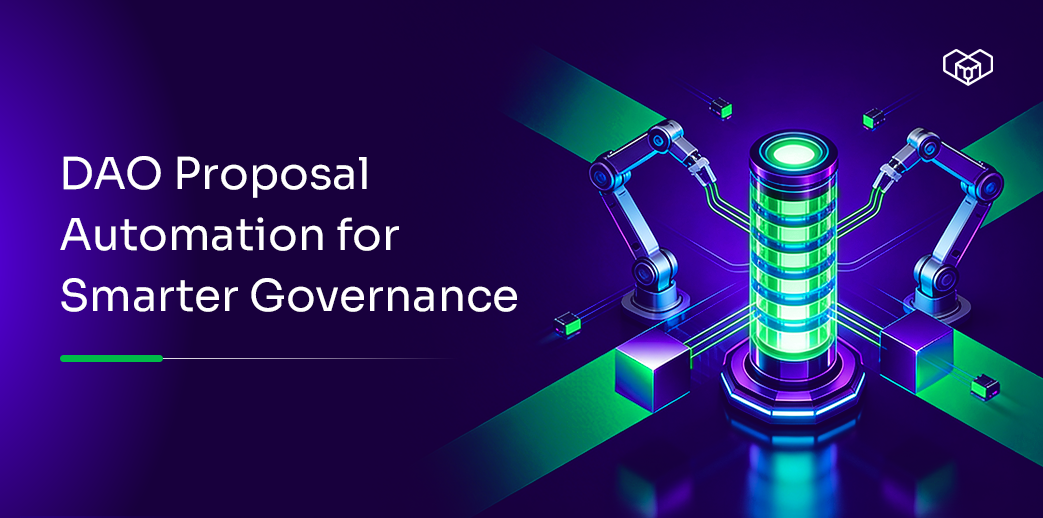
Read MoreDAO proposal automation solves one of governance’s biggest problems: missed votes and delayed decisions. In fast-moving communities, proposals pass before key contributors even see them. Without automated alerts tied directly to on-chain events, governance becomes reactive instead of intentional.
We’re pretty sure you would know the pain – the proposal has passed, the treasury moved, and someone realized they were supposed to review that decision three days ago. In fast-moving communities, this happens more often than most teams admit.
This guide is for DAO operators, governance contributors, and protocol teams managing active communities. The core problem is simple: governance notifications are fragmented across tools, leading to missed votes and unreviewed proposals. DAO proposal automation connects on-chain governance events directly to communication channels in real time.
The real problem comes from how DAO governance currently operates. Proposals live on-chain or on snapshot platforms, but notifications live elsewhere, often scattered across Discord, Twitter, and email threads that get buried.
By the time someone surfaces the proposal to the right stakeholder, the window has already closed. But things are changing with DAO proposal automation.
What if every proposal submission triggered an instant alert to the right channels? What if voting reminders went out automatically before deadlines?
Kwala makes this possible through event-driven automation that connects on-chain governance events directly to the tools your team already uses.
Ready to automate your DAO governance workflows?
Set up DAO proposal automation with Kwala and ensure every vote, proposal, and execution event reaches the right stakeholders in real time.
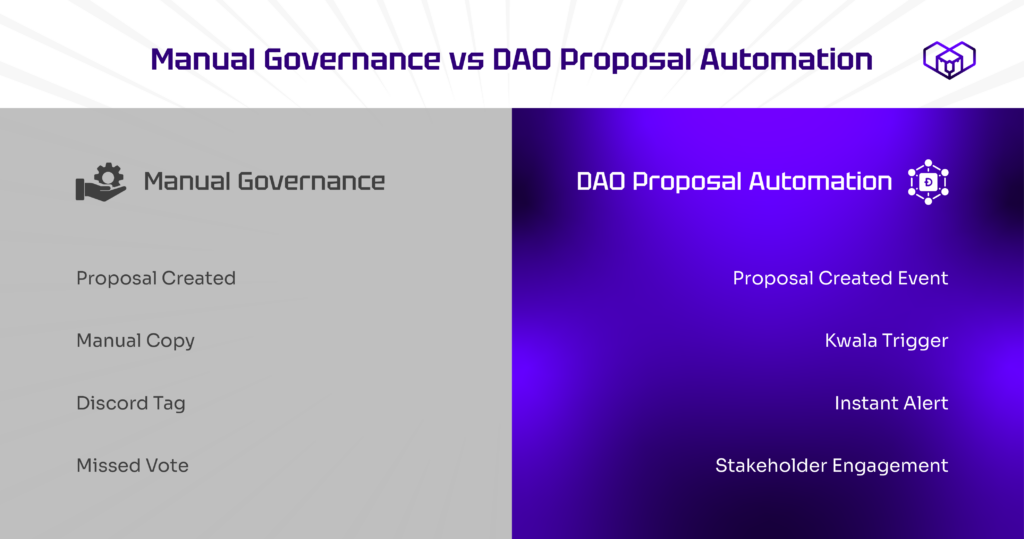
Why DAO Proposal Automation Is Critical for Governance
Options:
- The case for automated governance workflows
- What manual governance actually costs your DAO
Most DAOs run their governance workflows through a patchwork of manual processes.
Someone monitors the proposal queue, copies the details into Discord, tags the relevant people, and hopes the message does not get lost in general chat. This approach works when your DAO has twenty members and one proposal per month.
It breaks down quickly at scale. The people best suited to evaluate technical proposals end up spending their energy on administrative overhead instead of actual governance work.
DAO voting bots solve this by handling the notification layer automatically. When a proposal event fires on-chain, the bot captures the relevant data and routes it to the appropriate channel within seconds. No human intervention required for the alert itself.
Setting Up DAO Proposal Automation in Kwala
Options:
- Building governance bots with Kwala
- Event-driven automation for DAO proposals
Kwala operates as a decentralized backend that monitors on-chain events and executes predefined actions when those events occur. For DAO automation tools, this means setting up event triggers that watch your governance contract for specific activities.
The workflow follows a clear pattern. You define which smart contract events matter, such as a new proposal creation or a vote threshold being reached. Kwala listens for those events continuously.
When the event fires, your configured action executes immediately, whether that is sending a Discord webhook, triggering an email alert, or calling another API endpoint.
- Event triggers: Kwala monitors your governance contract for proposal submissions, vote completions, and execution events
- Instant delivery: Prevents proposals from passing unnoticed, ensuring key stakeholders have time to review, debate, and participate before deadlines close.
- Credit-based execution: You pay only when actions execute successfully, avoiding wasted resources on polling infrastructure .
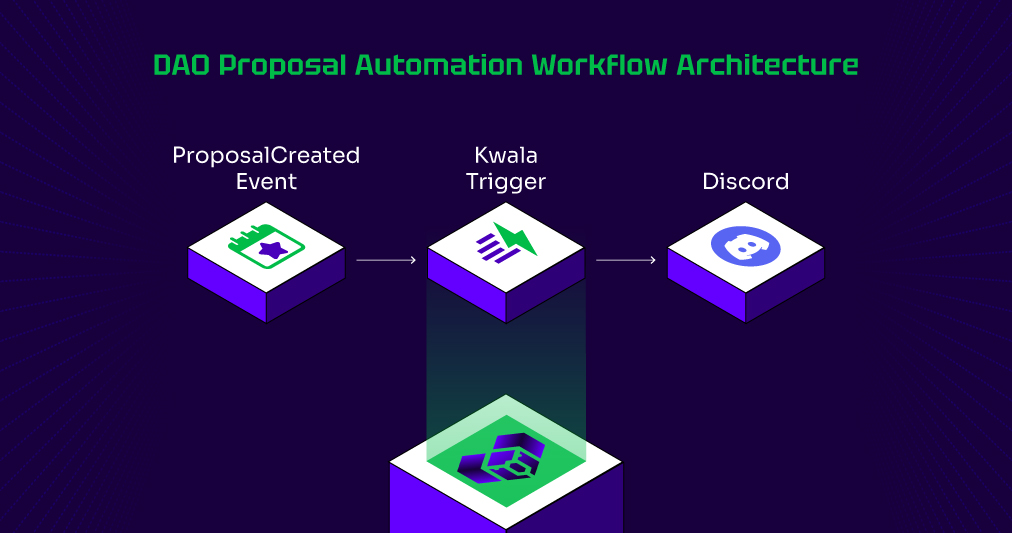
Setting up your first governance automation
The setup process requires no backend infrastructure on your end. You define your automation logic directly in the Kwala console.
1. Define your event trigger
Start by specifying the governance contract address and the event you want to monitor. For most governance frameworks, this will be a Proposal Created event or similar.
When your triggers are clearly defined, your workflows stay clean, accurate, and cost-efficient.
2. Configure the action
Set up the notification endpoint. Kwala supports Web2 API calls, which means you can connect to Discord webhooks, Telegram bots, Slack integrations, or email services through platforms like Zapier.
The event data from the blockchain gets packaged and sent automatically.
3. Deploy and monitor
Activate the workflow through the Kwala console. The system begins monitoring immediately. You can track executions and verify that notifications are reaching their destinations through the dashboard.
Scaling DAO Proposal Automation for Growing Communities
As DAOs grow, governance shifts from occasional votes to continuous decision-making. At that scale, manual coordination isn’t feasible. Thus, DAO governance automation is needed to keep proposals visible, actionable, and organized.
Here’s how it adds value:
- Handles dozens of proposals weekly: Event-driven DAO automation tracks proposal creation, updates, and voting milestones automatically, ensuring contributors never rely on manual monitoring or forum refreshes.
- Supports multi-chain governance contracts: Modern DAOs operate across multiple networks. Web3 governance workflows aggregate events from different chains into a unified monitoring layer so teams maintain a single operational view.
- Routes alerts by proposal type: Automation categorizes proposals and sends notifications only to relevant roles, such as treasury stewards, developers, or delegates, improving response quality.
- Prevents notification fatigue: Role-based subscriptions, batching, and digest alerts reduce noise while preserving awareness of high-priority governance actions.
- Ensures production-grade monitoring reliability: Robust systems handle chain reorganizations, retry failed deliveries, and confirm transaction finality before triggering actions, making governance automation dependable at scale.
Real governance scenarios for automated voting bots
Consider a DeFi protocol where treasury proposals can move significant funds. An automated alert ensures every core contributor receives notification the moment a proposal goes live, reducing the risk of decisions passing without proper review.
Smart voting Web3 patterns also extend to vote tracking. Your bot can notify stakeholders when a proposal approaches its voting threshold or when participation is low with time running out.
These targeted alerts drive engagement without flooding channels with irrelevant updates.
For DAOs managing multiple governance contracts or operating across chains, Kwala workflows can route different proposal types to specialized channels, ensuring technical proposals reach developers while marketing proposals reach the growth team.
The infrastructure handles the alerts while your team handles the strategy.
FAQs
How does DAO proposal automation improve governance transparency?
DAO proposal automation improves transparency by ensuring that every governance event is recorded, tracked, and surfaced in a structured way. Proposal creation, voting periods, quorum updates, and execution results can trigger automated logs and notifications that are visible to the community.
This reduces reliance on manual updates in forums or chat channels. Automated tracking also creates consistent historical records across tools and dashboards, making it easier for members to audit decisions, review participation patterns, and verify outcomes without ambiguity or missing context.
Can automation handle multiple governance contracts across chains?
Yes, modern DAO governance automation can monitor and manage multiple governance contracts deployed across different blockchain networks. Event listeners can subscribe to proposal and voting events on each supported chain, normalize the data, and route it into unified Web3 governance workflows.
This allows contributors to track activity from Ethereum, Layer 2 networks, or appchains in one operational layer. Reliable systems also account for chain reorganizations, delayed finality, and cross-chain execution dependencies to maintain accuracy.
Does automation replace community decision-making?
No, automation does not replace community decision-making; it supports it. Governance decisions still depend on human discussion, debate, and voting. Automation handles the operational layer around those actions.
It ensures proposals are surfaced on time, reminders are sent before voting deadlines, and execution events are confirmed and logged. By removing manual coordination work, event-driven DAO automation reduces administrative friction and allows contributors to focus on evaluating proposals rather than managing process logistics..