
 book a call with us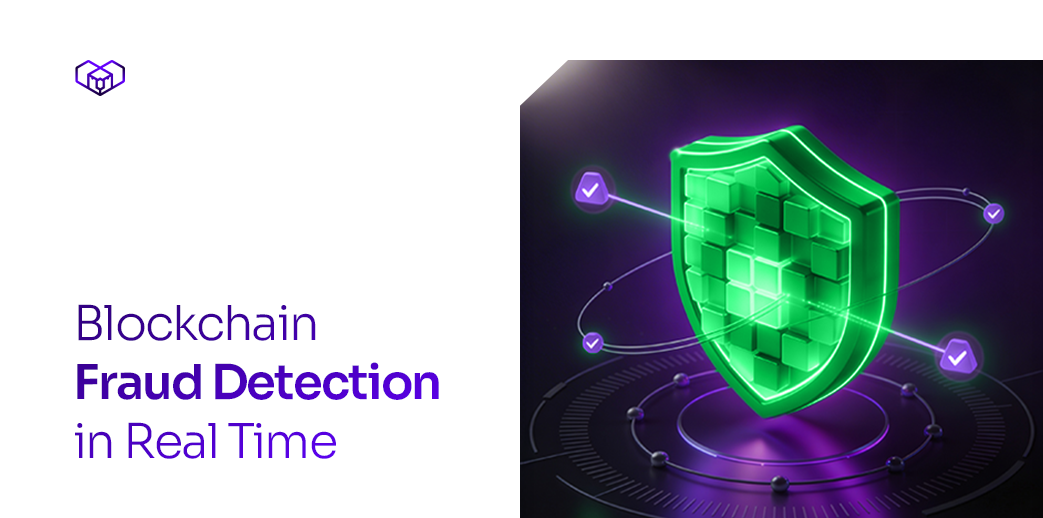
Blockchain fraud detection in DeFi is a race against time. By the moment most teams realize something is wrong, funds are already drained and routed through mixers. Traditional monitoring cannot match the execution speed of automated exploits, which is why AI-powered on-chain alerts are becoming critical for real-time Web3 security automation. This is for DeFi protocol […]
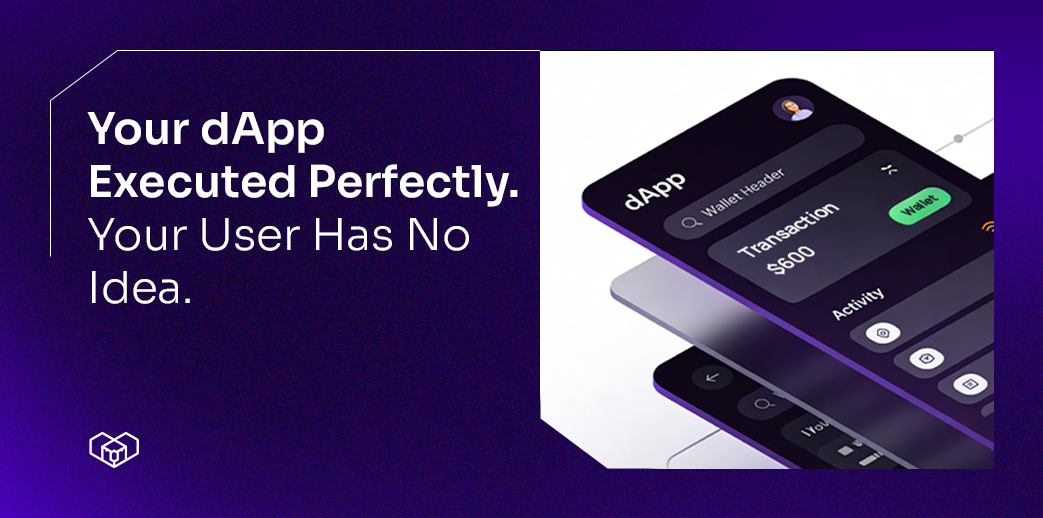
Read MoreThe dApp user experience problem is well-documented yet rarely addressed at the infrastructure layer. Blockchain automation is what changes that.
You know how Netflix just works? You click play, and the show starts.
No one thinks about the content delivery network spinning up, the authentication handshake, or the adaptive bitrate algorithm adjusting to your bandwidth. The technology is invisible because years of backend automation made it that way.
Now think about the last time you used a DeFi app. Did it feel anything like that?
A Messari report found that 73% of users abandon dApps during their first interaction, primarily due to friction in the experience. This implies that most users drop before they can even complete an action.
Now, compare that to Spotify’s 15-second signup or Amazon’s one-click checkout. The gap is not about capability. Smart contracts execute logic flawlessly. The problem is everything that happens around that execution, or rather, everything that does not happen.
When your swap completes on-chain, do you get instant confirmation? Or do you sit there refreshing, wondering if something went wrong? That uncertainty is a dApp user experience failure, and it is costing Web3 its shot at mainstream adoption.
The solution isn’t a prettier UI. It’s the backend automation layer that most dApp teams never build and that Kwala makes trivially easy to deploy.
What Happens When Feedback Loops Break in Web3
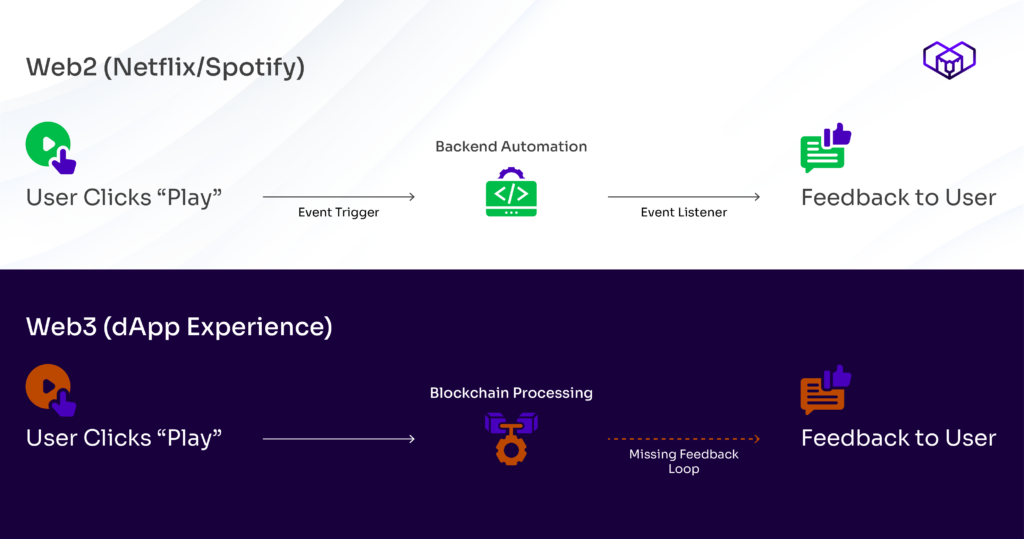
Web3 platforms face a brutal retention problem. According to research from EtherMail, retention rates drop to less than 1% after just 30 days. These numbers aren’t surprising when you understand what’s happening architecturally. Web2 platforms maintain persistent connections and event listeners that push state changes to the user instantly. Most dApps have no equivalent layer they rely on users to pull information manually, creating the perception that the application is broken or unresponsive. The infrastructure gap is real, and it’s measurable in retention data.
Why is that number so low? Because most dApps lack the invisible infrastructure that Web2 users take for granted.
Think about what happens after you submit a transaction. The blockchain does its job. Validators confirm the block. Your tokens move. But between that on-chain event and your awareness of it? Nothing.
You are left to poll block explorers manually, wondering if your transaction went through or got stuck in mempool limbo.
Users have reported that they did not know why their transaction had not arrived after a long time, were unsure whether the chain was under attack, and could not tell whether their funds were simply lost.
This kind of anxiety drives users away before they ever experience the actual value of your product.
The Web3 UX gap is not about prettier interfaces. It is about missing feedback loops that Web2 solved decades ago through event-driven automation.
How Event-Driven Automation Closes the Web3 UX Gap
Here is the mental shift that changes everything: instead of your users asking “did my transaction go through?”, your system tells them the moment it does.
This is what event-driven architecture enables. The user submits a transaction and receives confirmation within seconds of on-chain finality, without lifting a finger.
The Kwala platform operates as this invisible backend layer. You define which on-chain events matter, such as successful transfers, liquidity additions, or NFT mints. Kwala watches for those events continuously.
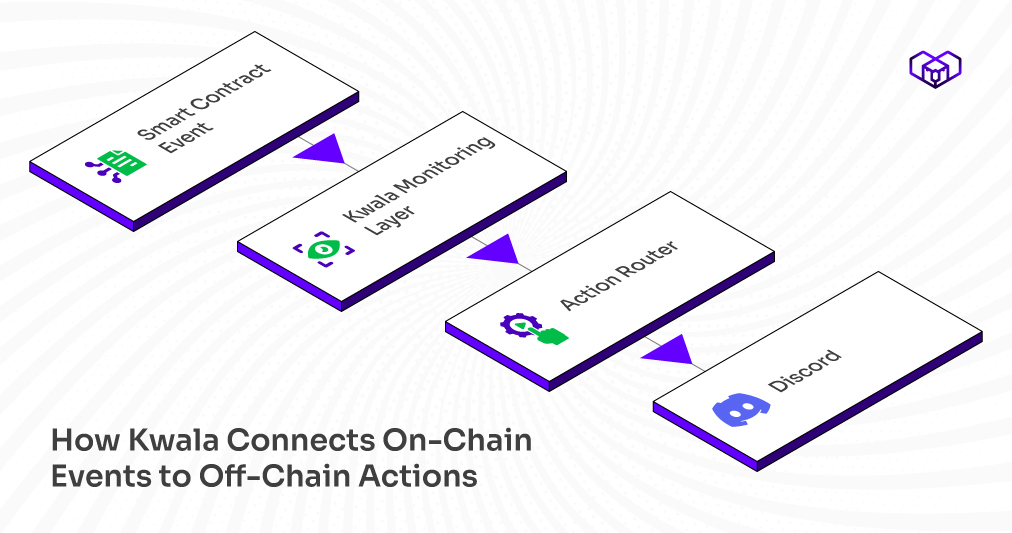
When they occur, it triggers your configured actions: webhook calls, email alerts, Telegram notifications, or API calls to update your frontend.
Setting up a workflow on Kwala follows a simple three-step pattern: define the smart contract and event signature you want to monitor, configure the action you want triggered (webhook URL, notification channel, or API call), and deploy. The platform manages the node infrastructure, event indexing, and delivery reliability all without your team running a single server. Unlike self-hosted solutions that require dedicated indexing nodes and constant maintenance, Kwala’s decentralized execution network handles uptime, scaling, and failover automatically. You focus on the workflow logic. Kwala handles everything underneath.
- No polling infrastructure to maintain: Kwala handles the monitoring, so your team does not need to run indexers or sync nodes
- Pay-as-you-go execution: Credits are charged only when actions execute successfully, not for idle server time
- Web2 API compatibility: Connect on-chain events to Discord, Slack, email services, or any endpoint that accepts webhooks
The result is blockchain automation that makes your dApp feel responsive instead of disconnected.
Where Automated Workflows Make a Measurable Difference
1. Transaction confirmation anxiety
Every time a user submits a transaction and sees nothing happen, their trust erodes. Did it work? Is it pending? Did I just lose money?
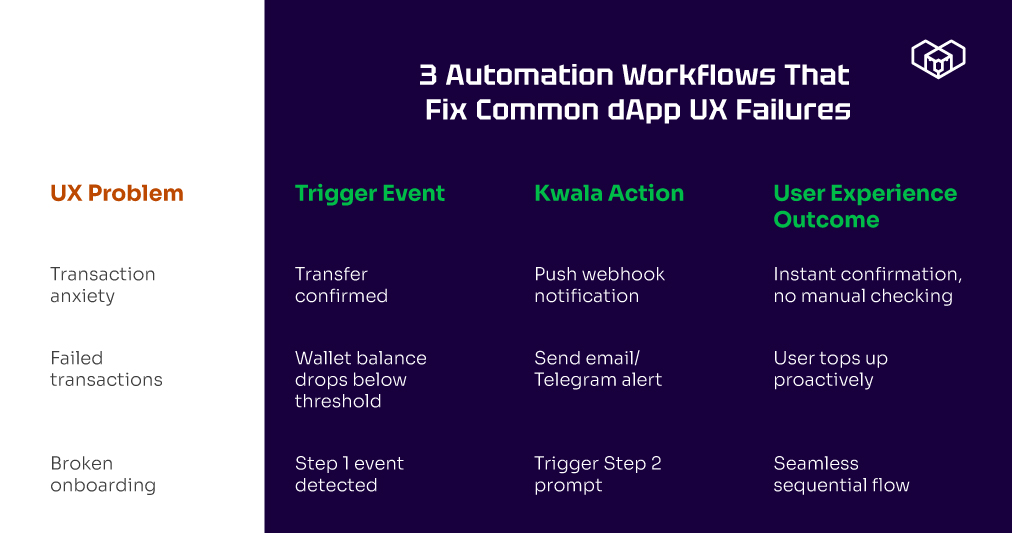
With high-speed chain triggers, your dApp can detect transaction completion and push a notification within seconds. With Kwala, you configure a trigger on the Transfer event of your token contract. The moment the transaction is finalized on-chain, Kwala fires your configured webhook pushing a confirmation to your frontend, your user’s email, or their Telegram in under three seconds.
The user does not need to watch pending states or manually verify balances. The system confirms the outcome directly. That single change can dramatically reduce the cognitive load users carry through every interaction.
2. Proactive balance warnings
How many failed transactions happen because users forgot to check their gas balance? With automated low-balance alerts, you can notify users before they attempt an action that will fail.
They top up their wallet proactively instead of hitting an error mid-flow. This is not a feature users will explicitly thank you for. They simply will not experience the frustration that would have driven them away.
3. Streamlined multi-step flows
Onboarding often requires multiple sequential actions: wallet creation, token claims, first interactions.
Without automation, users must manually navigate back and forth, checking whether each step completed before starting the next.
With event triggers, you can detect when step one finishes and prompt step two automatically. The user flows through the process instead of getting lost between screens.
Why Most Teams Skip This — And How Kwala Changes That
- The infrastructure burden that blocks better UX
- Building responsiveness without the overhead
Building this kind of responsiveness traditionally required:
- Indexing infrastructure to track on-chain events
- Webhook servers to process and route notifications
- Custom scripts to handle event parsing and formatting
- Ongoing maintenance to keep everything synced and running
Most development teams skip this work because the operational burden outweighs the perceived benefit.
Kwala abstracts that entire operational layer. You configure event triggers and actions through a declarative YAML structure. The platform handles monitoring, execution, and delivery on a decentralized network. Kwala’s execution layer operates across a distributed network of nodes rather than centralized servers, meaning there is no single point of failure for your workflow delivery. This architectural choice matters for dApps that need reliable, censorship-resistant automation not just convenience tooling.
# Example Kwala workflow configuration
trigger:
contract: “0xYourContractAddress”
event: “Transfer”
network: “ethereum”
action:
type: webhook
url: “https://yourapp.com/api/notify”
payload:
message: “Transfer confirmed for {{from}} → {{to}}”
The credit-based model means costs scale with actual usage. During quiet periods, you are not paying for idle infrastructure. During high-activity phases, the platform scales without you managing capacity.
This is how Web3 usability improves without requiring every team to become infrastructure specialists.
Automated workflows aren’t a future state for Web3 — they’re available right now, without the infrastructure overhead that has historically made them inaccessible to most teams. If your dApp is losing users to friction that better backend tooling would eliminate, Kwala is worth exploring.
Start building your first workflow → Kwala
Frequently Asked Questions About dApp Automation & Web3 UX
Does automation add latency to the user experience?
Kwala monitors events continuously and triggers actions within seconds of on-chain confirmation. The automation layer actually reduces perceived latency by delivering feedback faster than manual checking ever could.
Can I automate dApp notifications across Discord, Telegram, and Email?
Yes. Kwala supports Web2 API calls, which means you can connect to Discord, Telegram, email services through Zapier, or any custom endpoint. Each workflow routes event data to the appropriate channel for your users.
Does Kwala support multi-chain dApp workflows?
Kwala supports multi-chain operation. Each workflow is scoped to a single smart contract on a single network, giving you precise control over event sources. For dApps operating across multiple chains, you deploy parallel workflows one per network and route outputs to the same notification channels or endpoints. True cross-chain event bridging is outside scope, but multi-environment coverage is fully supported.