
 book a call with us
What if your Web3 app could react to on-chain events the moment they happened: without a single server, listener, or custom backend? From NFT mints to DeFi movements and cross-chain updates, real-time reactions are now essential to how dApps operate. Yet achieving this responsiveness is anything but simple. Developers still manage their own decentralized event listener backend, track […]
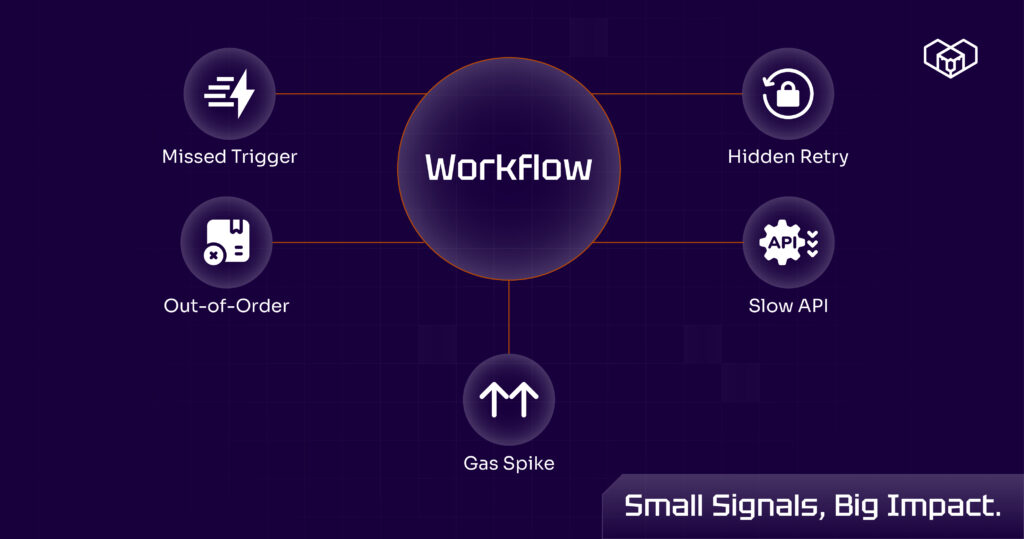
Read MoreIn Web3, most workflow issues don’t show up as big errors. They surface quietly: a delayed trigger, an action that runs out of order, a missed event when the network gets busy. For teams building real automation, this lack of visibility becomes the real bottleneck.
Kwala solves a large part of this problem by giving developers reliable, real-time insight into how their workflows behave.
Among its many capabilities, monitoring on-chain events is one of the most important because it turns opaque workflow activity into something you can actually track.
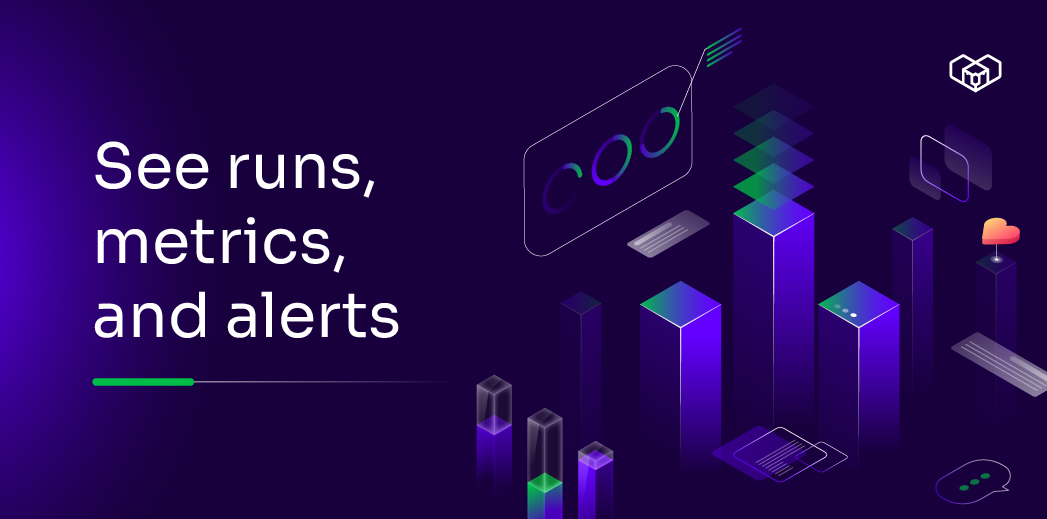
With Kwala’s analytics and KPIs layered on top, developers don’t need to guess why something executed slowly or why a cross-chain action behaved unexpectedly. They get clear signals in performance trends, execution outcomes, timing patterns: all presented as live, actionable data instead of scattered logs.
Why real-time workflow visibility matters in blockchain
In blockchain environments, state changes are continuous. A workflow may listen to thousands of events per minute, execute functions across contracts, call APIs, or coordinate logic across multiple chains.
Without proper monitoring:
- Failed triggers go unnoticed
- Retries stack silently
- Inefficient logic consumes unnecessary
- Latency creates user-visible delays
- Errors at contract, event, or action level remain unclear
Traditional monitoring tools were not built for multi-chain event behaviour. Teams often stitch together custom scripts, RPC logs, and cloud dashboards to approximate visibility. Kwala eliminates this fragmentation by letting workflows themselves become observable objects: each trigger, event, and action becomes trackable.
This is also fundamental to teams building real-time blockchain workflow backend systems. They need to understand not just if something ran – but why, how fast, and what happened afterward.
How Kwala captures analytics from live blockchain activity
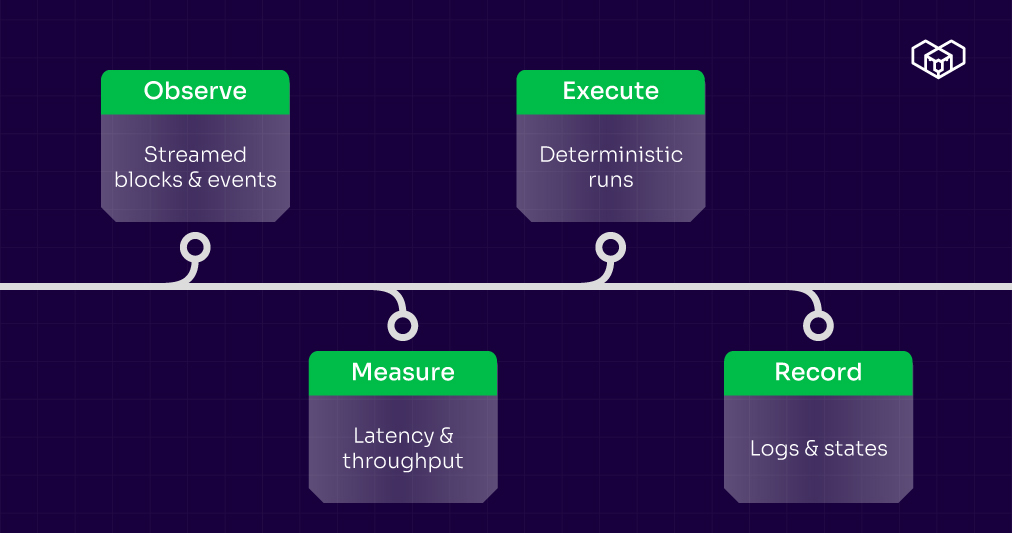
Because every workflow in Kwala passes through decentralized nodes that listen to event logs continuously, monitoring becomes native to the protocol.
The system tracks:
Trigger responsiveness
Kwala records when an event is first observed, how quickly the workflow reacts, and whether triggers fire as expected across chains.
This helps developers detect issues like missed events, delayed execution windows, incorrect trigger configuration, or network-specific bottlenecks. Since Kwala streams every block into the network, trigger monitoring becomes chain-agnostic.
Execution outcomes and failure patterns
Every action in a workflow logs whether it succeeded, reverted, timed out, or produced unexpected output. Developers get clear visibility into:
- Contract execution failures
- API call issues
- Gas-related behavior
- Multi-step logical errors
- Dependency failures across chains
This is particularly useful for teams using Kwala as their developer backend platform, because execution monitoring replaces days of manual debugging.
Performance KPIs
Kwala aggregates performance indicators designed for blockchain automation:
- Trigger-to-action latency: how many milliseconds or blocks elapsed
- Execution success rate
- Event throughput (how many events are processed per interval)
- Cross-chain action reliability
- Average compute usage per workflow
- Credit consumption per execution
Workflow lifecycle states
Every workflow moves through validation, deployment, claiming, activation, and execution. Kwala tracks each stage in real time so teams always know:
- Whether a workflow is actively listening
- Whether nodes have claimed execution
- Whether a workflow is stuck in deployment
- Whether the workflow is paused, expired, or running on schedule
This prevents silent failures: one of the biggest pain points in Web3 backend operations.
4 Analytics that directly support production-grade automation
Real-time visibility is not only about debugging; it’s also about scalability. As workflows grow in volume, developers need clarity on how automations behave under increasing load.
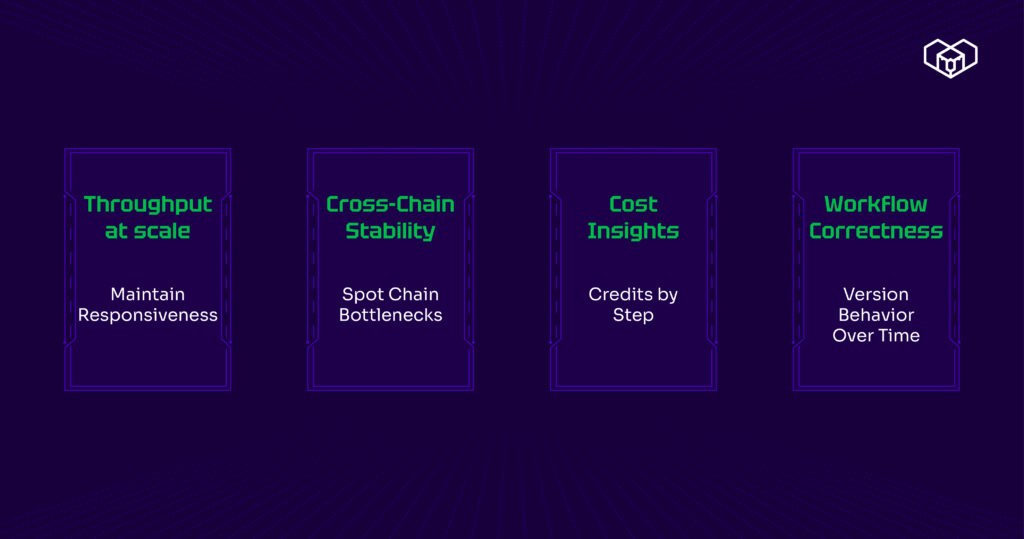
Kwala’s analytics help teams monitor:
1. Throughput at scale
When workflows handle thousands of triggers per second, Kwala tracks whether the system maintains responsiveness across chains.
2. Cross-chain orchestration stability
Since Kwala’s network handles orchestration across the major L1s and L2s, KPIs help identify where a chain-specific bottleneck may affect workflow behaviour.
3. Cost insights
Kwala’s credit model makes consumption predictable. Analytics reveal:
- Credits used per action
- Idle workflows consuming zero cost
This allows teams to scale without hidden backend overhead.
4. Workflow correctness over time
Monitoring helps teams ensure that workflows behave consistently across different versions, deployments, and conditions. As developers refine logic, analytics validate whether improvements are actually working.
Why this monitoring layer matters
Real-time monitoring is not an add-on in Kwala; it is a core part of how the protocol works. When developers build on top of a workflow system powered by continuous event streams, they gain something traditional systems can’t provide: visibility tied directly to blockchain behaviour.
It works well within real-time blockchain workflow backend setups where quick responses to on-chain changes are essential. In those cases, Kwala provides a steady operational layer for clear monitoring and reliable execution.
It also delivers the benefits teams typically look for in a developer backend platform – minus the usual complexity.
Putting it all together: an analytics layer built for Web3 automation
As Web3 systems evolve, monitoring can no longer be a reactive function, developers need observability that speaks the language of blockchain triggers, contract events, and cross-chain orchestration.
Kwala delivers this through a comprehensive analytics and KPI layer that makes workflow behaviour transparent, predictable, and continuously trackable.
FAQs on web3 backend analytics and workflow monitoring
1. How does workflow monitoring help prevent duplicate or missed executions?
By maintaining execution state and event acknowledgment, monitoring ensures each on-chain trigger is processed exactly once – even under high load or network reorgs.
2. Does Kwala’s analytics support historical workflow analysis or only real-time data?
Kwala tracks real-time workflow performance, but it also stores execution histories so teams can review past trigger activity, compare versions of the same workflow, and understand long-term performance trends.
3. Does monitoring add any overhead or slow down workflow execution?
No, workflow monitoring is built into the protocol’s execution layer. It does not add additional load or delay.
Kwala’s nodes record execution details as part of their normal workflow lifecycle, keeping performance consistent whether the workflow executes once per hour or thousands of times per minute.