
 book a call with us
Scaling a Web3 game is rarely about graphics or gameplay mechanics. The real friction begins once players arrive. Every dice roll, point update, NFT upgrade, or reward claim creates on-chain activity that must be monitored, processed, and acted upon in real time. For most teams, this quickly turns into a backend problem: servers, listeners, retries, and […]
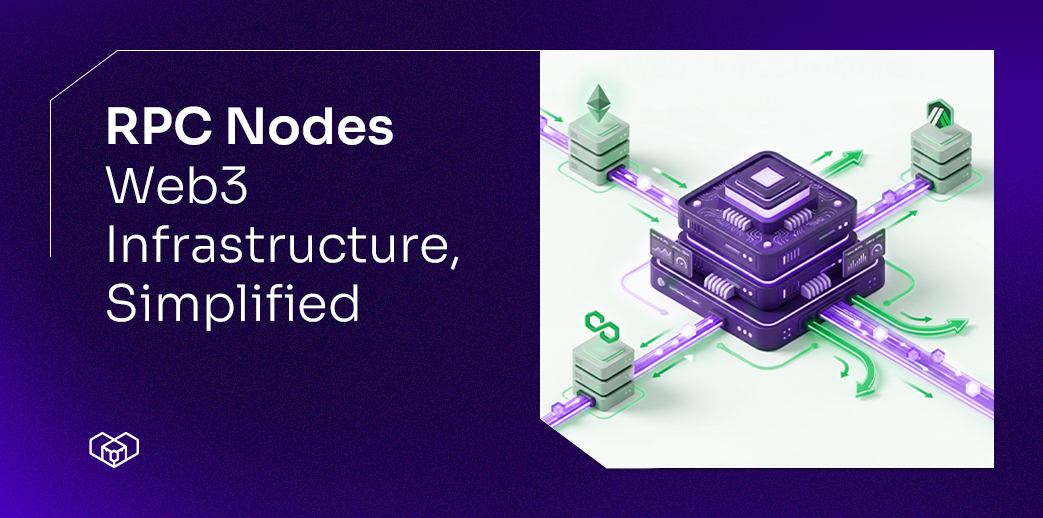
Read MoreRPC nodes Web3 infrastructure becomes your problem the moment you scale. Most teams don’t notice it during testnet development, but once traffic increases, rate limits, latency, and node reliability start impacting real users.
This is for Web3 teams scaling from MVP to production. The core problem isn’t smart contracts, it’s RPC infrastructure reliability. Once real traffic hits, rate limits, sync issues, and latency turn RPC nodes Web3 infrastructure into your biggest operational risk.
Your app is working great on testnet. Users are connecting wallets, transactions are confirming, everything feels smooth. Then you launch, and the traffic picks up. Suddenly those free Infura requests start timing out at the worst possible moments.
You check your dashboard and realize you’ve hit rate limits. Again!
It’s 2 AM, and users are complaining that the app feels broken.
Running your own nodes seems like the answer until you realize that means managing servers, handling updates, monitoring uptime, and dealing with sync issues. Is this really what you signed up for when you wanted to build a dApp?
Kwala RPC infrastructure treats this whole problem as something developers shouldn’t waste time on. The Web3 RPC nodes just work, scale automatically, and stay out of your way while you focus on actually building.
When free endpoints stop being enough
Ask anyone who’s shipped a Web3 app what happened after their first viral moment. You’ll hear some version of this story.
Public RPC endpoints work perfectly fine when you’re the only one using them. Development goes smoothly, testing feels fast, and everything seems ready for launch.
Then real users show up in thousands. Your application is hammering those RPC nodes Web3 endpoints constantly.
And the rate limits you never thought about? They’re very real now. Moreover, requests start failing, and transactions get stuck. Users think your app is broken when, in reality, you’re just being throttled by infrastructure you don’t control.
So you do what everyone does: upgrade to paid tiers. That works until the next growth spike hits and you’re explaining to your team why Web3 RPC infrastructure costs are eating into runway.
Running Your Own RPC Nodes Web3: Hidden Operational Costs
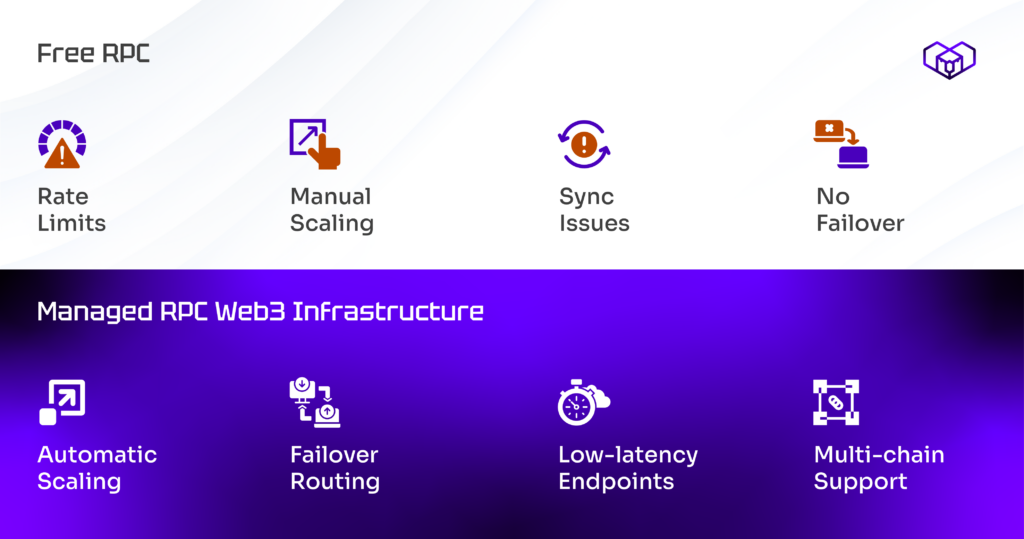
The alternative, running your own nodes, sounds appealing until you actually try it. Suddenly you’re dealing with:
- Syncing issues when nodes fall behind
- Maintenance windows during critical usage periods
- Geographic latency for international users
- Failover complexity when hardware fails
- Multi-chain headaches as you expand networks
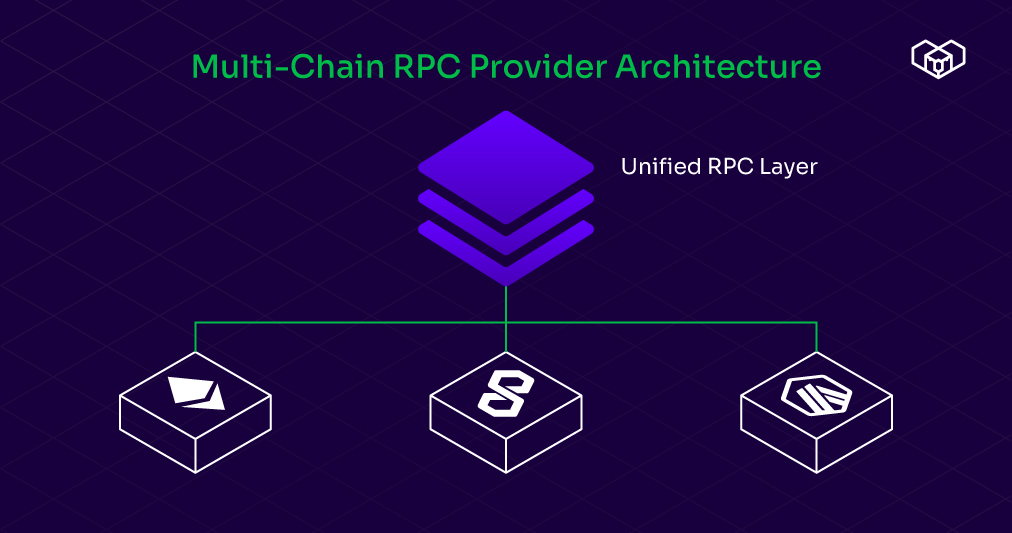
Multi-chain RPC provider management multiplies these problems across every network you support.
Add Polygon and you need another node. Support Arbitrum and that’s more infrastructure. Each chain becomes its own operational burden.
Is this really where your engineering time should go? Most teams building serious applications eventually realize the answer is no.
There are tools designed to handle blockchain infrastructure complexity so developers don’t have to.
What actually changes with managed infrastructure
Instead of you managing nodes, with managed RPC Web3 services, the infrastructure handles itself while you consume reliable blockchain access.
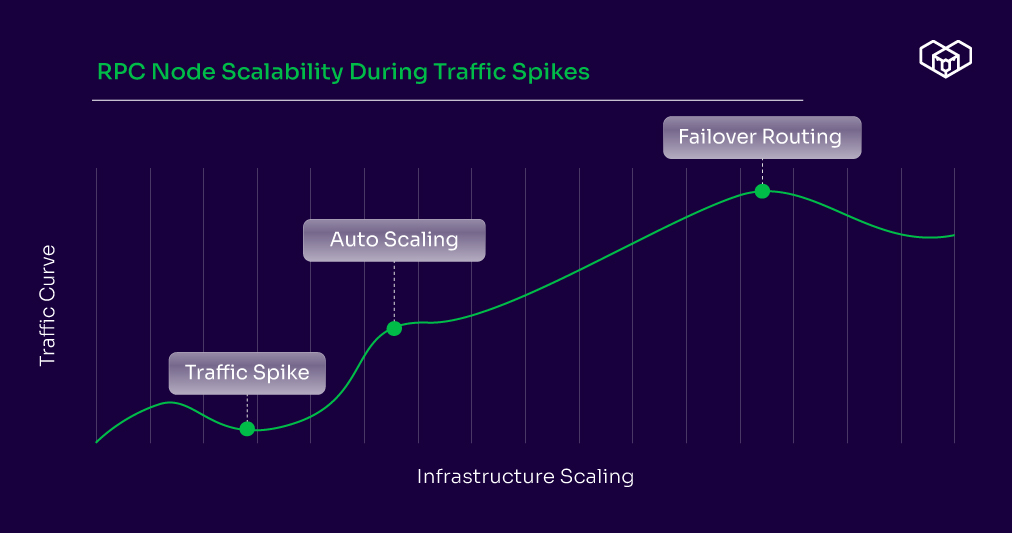
Load balancing happens automatically. In fact, even the traffic is distributed across multiple nodes without you configuring anything. If one node has issues, requests route to healthy ones instantly.
Low-latency RPC endpoints get provisioned based on where your users are. Someone in Tokyo doesn’t hit the same node as someone in London. Geographic optimization happens behind the scenes.
Capacity planning disappears as a concern. Usage doubles overnight? The infrastructure scales to match. Launch on Product Hunt and see 10x traffic? It handles that too. You’re not frantically upgrading tiers or adding servers at 3 AM.
Kwala RPC nodes Web3 approach treats all of this as solved infrastructure:
- Automatic failover prevents transaction failures during node outages, protecting user experience and preventing lost on-chain interactions.
- Multi-chain support through the same integration
- Consistent performance during unexpected traffic spikes
- Zero rate limit management because capacity adjusts dynamically
The simplified RPC management Kwala provides means you configure endpoints once and they just keep working. Teams implementing automated Web3 workflows discover that reliable RPC node scalability matters more than they initially realized.
Where Kwala fits in the infrastructure equation
Most Web3 developers didn’t start building to become node operators. You wanted to create applications that do something interesting with blockchain capabilities.
Managed RPC Web3 recognizes this misalignment. However, the infrastructure should enable product development, instead, it requires more resources to optimize node configurations.
How Kwala handles RPC nodes Web3 comes down to treating blockchain access as utility infrastructure. You plug in, it works, you move on to building features that actually differentiate your application.
The trustworthy RPC infrastructure Kwala delivers means teams using serverless blockchain architecture can focus entirely on application logic. Kwala serverless RPC for dApps becomes invisible infrastructure that just works.
Ready to stop managing RPC nodes Web3 infrastructure?
Start building with Kwala’s managed RPC Web3 platform and scale your dApp without rate limits, server maintenance, or infrastructure headaches.
FAQs
Does managed RPC create vendor lock-in?
Not really. Applications connect through standard RPC endpoints. Switching providers means updating endpoint URLs in your config, same as migrating between any RPC services.
How does managed infrastructure handle chain upgrades?
The platform monitors network changes and updates nodes automatically. Your application keeps working through upgrades without you coordinating anything.
What happens during extreme traffic spikes?
Infrastructure scales capacity automatically in response to demand. Applications maintain consistent performance without manual intervention, even during unexpected viral moments or market volatility.