
 book a call with us
What if your Web3 app could react to on-chain events the moment they happened: without a single server, listener, or custom backend? From NFT mints to DeFi movements and cross-chain updates, real-time reactions are now essential to how dApps operate. Yet achieving this responsiveness is anything but simple. Developers still manage their own decentralized event listener backend, track […]
Read MoreDeFi should feel exciting, not exhausting. But most teams end up running a mini power plant just to keep their protocol alive.
You chase node issues.
You fix broken listeners.
You rebuild the same backend clutter every time you add a chain.
It drains energy and slows everything you want to ship.
Kwala steps in as a backend service for DeFi dApps, a blockchain infrastructure automation service, and a multi-chain dApp backend layer that handles the work no one wants to touch. It keeps things simple so builders can actually build.
In this piece, we’ll look at how that unlocks the true DeFi scale.
Why scaling DeFi still feels hard
Let’s take a look at how the struggles show up:
- Too many backend systems and dependencies behind each transaction.
- Listeners, watchers, and scripts that fail at the worst times.
- Cross-chain actions that need custom plumbing every single time.
- Backend logic that expands faster than the smart contracts do.
- Infrastructure that gets expensive without adding real value.
- Teams spending nights fixing issues instead of shipping upgrades.
- Growth slowing because the backend can’t keep pace.
It happens to almost everyone. And this is where a blockchain infrastructure automation service changes the entire growth curve.
Kwala: A no-devops backend fabric for defi
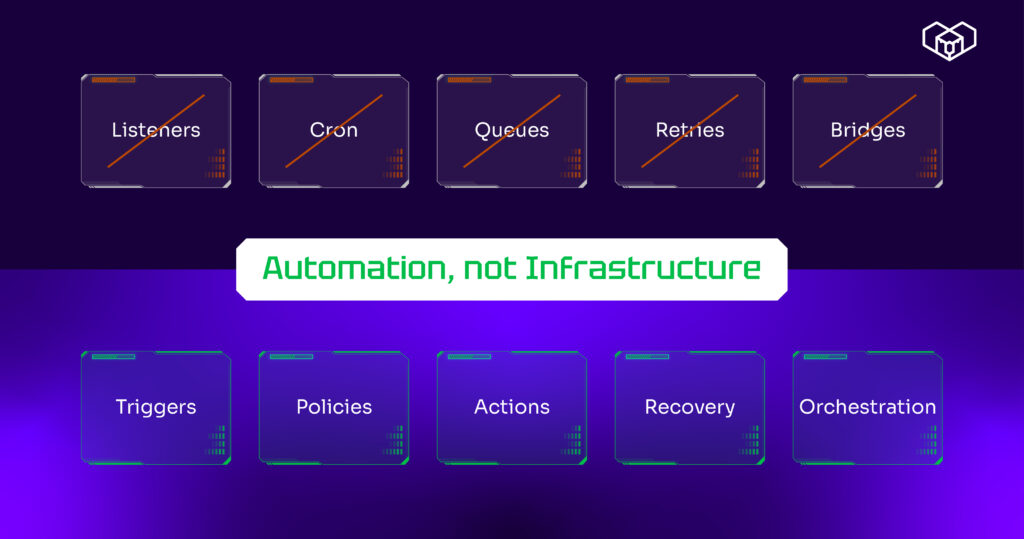
Kwala is a clean automation layer that sits behind your protocol and handles the work most teams struggle to maintain. It brings in a set of strengths that remove friction and keep growth steady.
Here’s how it supports scaling:
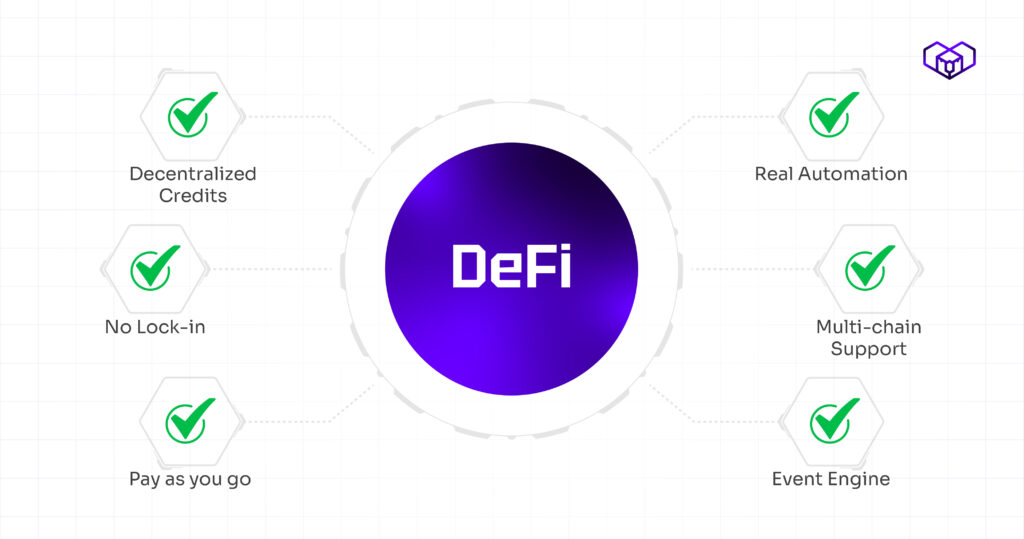
- A decentralized, credit-based system that grows with your protocol.
- No vendor lock-in, so teams stay free to build the way they want.
- A pay-as-you-go model that keeps backend costs simple and predictable.
- The only workflow automation protocol for Web3, built for real automation at scale.
- Multi-chain dApp backend services that support Web2 API calls and major blockchain networks.
- A smooth event engine that monitors on-chain activity (like asset mints) and triggers actions, such as Telegram alerts.
- A reliable backend service for DeFi dApps that removes manual scripts, polling, and DevOps fatigue.
It feels like handing your backend to a system built to stay calm, consistent, and scalable.
How DeFi protocols scale with Kwala
Now you might be wondering how exactly Kwala supports DeFi scaling. Well, it does this in a few ways:
1. Offloading backend logic into an automated execution layer
Most DeFi teams carry too much backend weight, and Kwala absorbs that load by functioning as a backend service for DeFi dApps. Scripts, cron jobs, and scattered automation get replaced with organized workflows that run reliably on their own. This keeps engineering clean and frees teams to focus on protocol growth instead of backend repairs.
2. Real-time blockchain monitoring without DevOps burnout
On-chain events like asset mints, swaps, or approvals, are detected instantly, and actions, like sending Telegram alerts, are triggered automatically.
This setup works as a dependable blockchain infrastructure automation service, eliminating the need for custom listeners or heavy node maintenance. Teams get real-time intelligence without the usual operational strain.
3. Cross-chain execution through unified workflows
Expansion to new chains becomes far easier when all automation runs through one workflow engine. With multi-chain dApp backend services, a trigger on Ethereum can activate a response on Polygon or any supported network without custom bridges or extra backend code. Multi-chain growth becomes smooth instead of resource-heavy.
4. Decentralized runners that scale whenever you do
Execution isn’t tied to your servers; it moves through a network of distributed runners built to handle surge loads. This structure keeps performance steady during peak activity and ensures high uptime as demand increases. Protocols scale naturally because capacity adjusts without manual intervention.
5. A predictable economic model for automation at scale
Scaling becomes easier when backend costs stop fluctuating. The credit-based system keeps expenses clear, avoids vendor lock-in, and prevents infrastructure from ballooning as users grow.
The result is a scaling path where automation stays affordable, predictable, and directly tied to actual workload.
Where Kwala fits in your DeFi stack
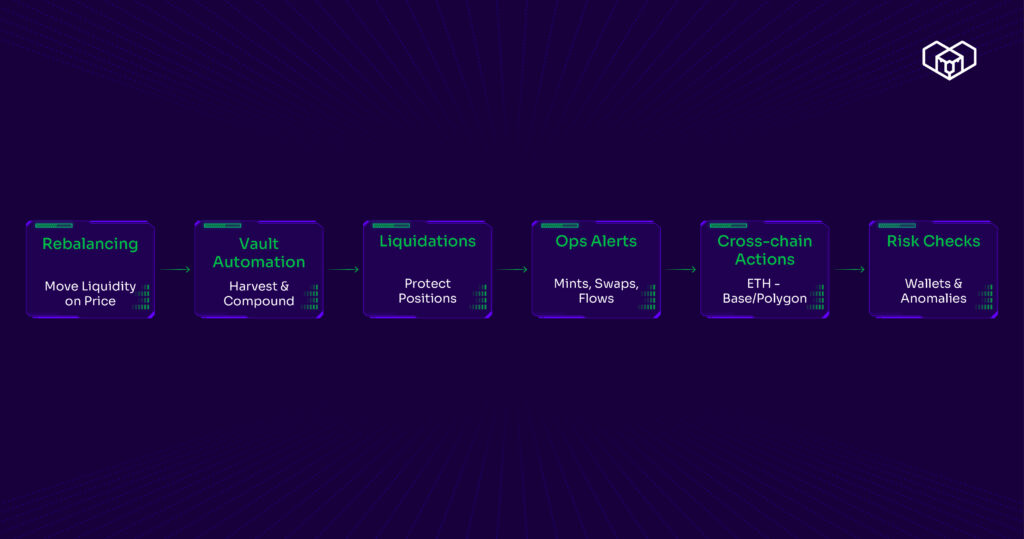
Confused about where Kwala actually supports you in the real world? Its strength shows up in practical moments where a backend service for DeFi dApps, a blockchain infrastructure automation service, or multi-chain dApp backend services remove friction and help your protocol scale with less effort.
Below are the clearest ways it helps:
- Automated rebalancing across chains: Move liquidity or adjust pool weights when prices change, without scripts or manual triggers.
- Vault and yield strategy automation: Run harvesting, compounding, reallocations, and risk checks through a single workflow engine.
- Smart liquidation and stop-loss workflows: Detect unhealthy positions instantly and trigger protective actions before losses stack up.
- On-chain event alerts for ops and community: Catch mints, transfers, swaps, or unusual flows and send Telegram or Discord alerts in real time.
- Cross-chain execution for multi-network protocols: Trigger actions on Polygon, Base, or other chains from events happening on Ethereum.
- Risk and compliance monitoring: Automatically track wallet behavior, unusual movement patterns, or large-volume shifts.
These use cases show how Kwala turns backend complexity into a scalable, automated foundation for DeFi growth.
Scaling DeFi starts with fixing the backend, and Kwala makes it simple
DeFi can only grow when the backend stops dragging the protocol down. Most teams scale more slowly because they juggle scripts, listeners, and cross-chain plumbing instead of improving the product. A solid automation layer changes everything.
Kwala steps in as a backend service for DeFi dApps, giving you a stable base, a clean execution engine, and real support across chains through multi-chain dApp backend services. It also acts as a blockchain infrastructure automation service, keeping the hidden work consistent so the protocol can focus on users, not upkeep.
Switch to automated backend workflows with Kwala and build without friction
FAQs on backend service for DeFi dApps
What is DeFi dApp development services?
DeFi dApp development services help teams build, automate, and scale decentralized applications, often supported by backend services for DeFi dApps and smart contract integrations.
What is the best platform for DeFi?
The best platform depends on your use case, but ecosystems like Ethereum, Polygon, and Base work well with blockchain infrastructure automation services and advanced developer tooling.
What is the backend of the blockchain?
The backend includes nodes, listeners, automation engines, and off-chain systems that keep workflows running; tools like Kwala simplify this through multi-chain dApp backend services.
Which network allows for dApps?
Networks like Ethereum, Polygon, Avalanche, Solana, and Base support dApps and integrate easily with backend services for DeFi dApps and workflow automation layers.