
 book a call with us
Web3 teams rarely start out planning for multi-chain complexity. They begin with a simple requirement: monitor a contract, react to an event, run a function. However, the moment the product needs to expand beyond a single network, the backend becomes a patchwork of RPC endpoints, indexing scripts, cloud functions, and chain-specific logic. What should be a […]
Read MoreMost Web3 teams understand what blockchains enable- trustless execution, transparent state, and programmable logic that fix many Web2 limitations. Yet, building Web3 products still pushes teams back into managing backend infrastructure, just to keep up with the chain.
Teams end up running event listeners that break during reorgs and maintaining cron jobs for retries and time-based logic. On top of that, they stitch together custom services to coordinate smart contracts, APIs, and users.
And guess what? Much of this work isn’t core to the product- it’s plumbing. Yet, teams spend a lot of time debugging backend failures, handling edge cases, and keeping systems in sync with on-chain state.
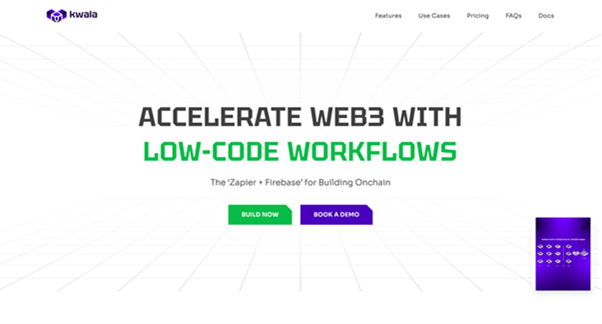
This is what Kwala aims to resolve. It brings a low-code, stateless, decentralized workflow automation layer that turns on-chain events into programmable workflows.
In this blog, we’ll explore why you should swap these custom backends for decentralized backend platforms.
Key Takeaways:
- Custom Web3 backends create fragile infrastructure that’s expensive to build, scale, and maintain.
- Off-chain backend systems introduce the biggest security risks in otherwise audited Web3 stacks.
- Backend-heavy workflows slow product launches and delay even simple on-chain features.
- Workflow engines replace polling and servers with real-time, event-driven automation.
- Decentralised workflows simplify cross-chain logic and Web2 integrations without custom glue code.
Five Reasons Custom Web3 Backends Struggle at Scale
Traditional backend systems are designed around databases you can update at will. On blockchains, state changes happen through consensus, which most backends aren’t built to handle.
Here’s where things break down:
1. Complex infrastructure
Every on-chain event you want to react to requires:
- Indexers or RPC listeners
- Polling infrastructure
- Retry logic
- State reconciliation
- Monitoring and alerting
In this scenario, what begins as just one listener becomes a fragile web of scripts that only an engineer can understand. In fact, around 70% of real-time infrastructure projects run longer than planned, and 90% need four or more engineers for maintenance!
In the Web3 workflow engine, every user action depends on reacting to on-chain events in real time. This operational burden shows up even faster, and at a much higher cost.
2. Security risks multiply off-chain
Smart contracts are audited, but off-chain systems usually aren’t. And that’s where things get risky. Custom backends introduce:
- Private key management risks
- Misconfigured permissions
- Silent failures in cron jobs
- Centralized points of failure
- Lack of web3 infrastructure tools
Ironically, many Web3 hacks originate outside the chain.
Over $2 billion was lost to Web3 hacks in the first quarter of 2025 alone, with operational and off-chain failures contributing significantly. So, while your contracts may be airtight, the backend that supports them often becomes the weakest link.
3. Slower time-to-market
Let’s assume that you want to launch a token airdrop, a DAO action, or even a rewards update. In that case, the new workflow would need backend changes, redeployments, and QA cycles.
You will also need listeners, eligibility logic, and cross-team coordination. This entire process, which typically should take days, can easily stretch into weeks. Instead of shipping product improvements, you will spend more time maintaining plumbing.
Difficult web2 and web3 integration
This is where most teams struggle. For example, a user completes an on-chain action. They mint an NFT, pass a DAO vote, or finish a staking requirement. Now you might want to send a confirmation email, update a CRM, trigger a compliance check, or log the event in analytics.
The blockchain has no idea how to do that.
So, teams write glue code. It’s a service that listens for events, calls Web2 APIs, retries on failure, and keeps everything in sync. And if it breaks, debugging spans both worlds. That’s the biggest gap. And that’s why teams often explore blockchain backend alternatives.
What changes when you ditch custom backends
Once teams stop trying to force blockchains into traditional backend patterns, the Web3 architecture gets simplified. Instead of managing servers, they let blockchain events drive what happens next. Here’s what changes:
- On-chain state changes become triggers.
- Workflows react in real time.
- Infrastructure gets lighter, not heavier.
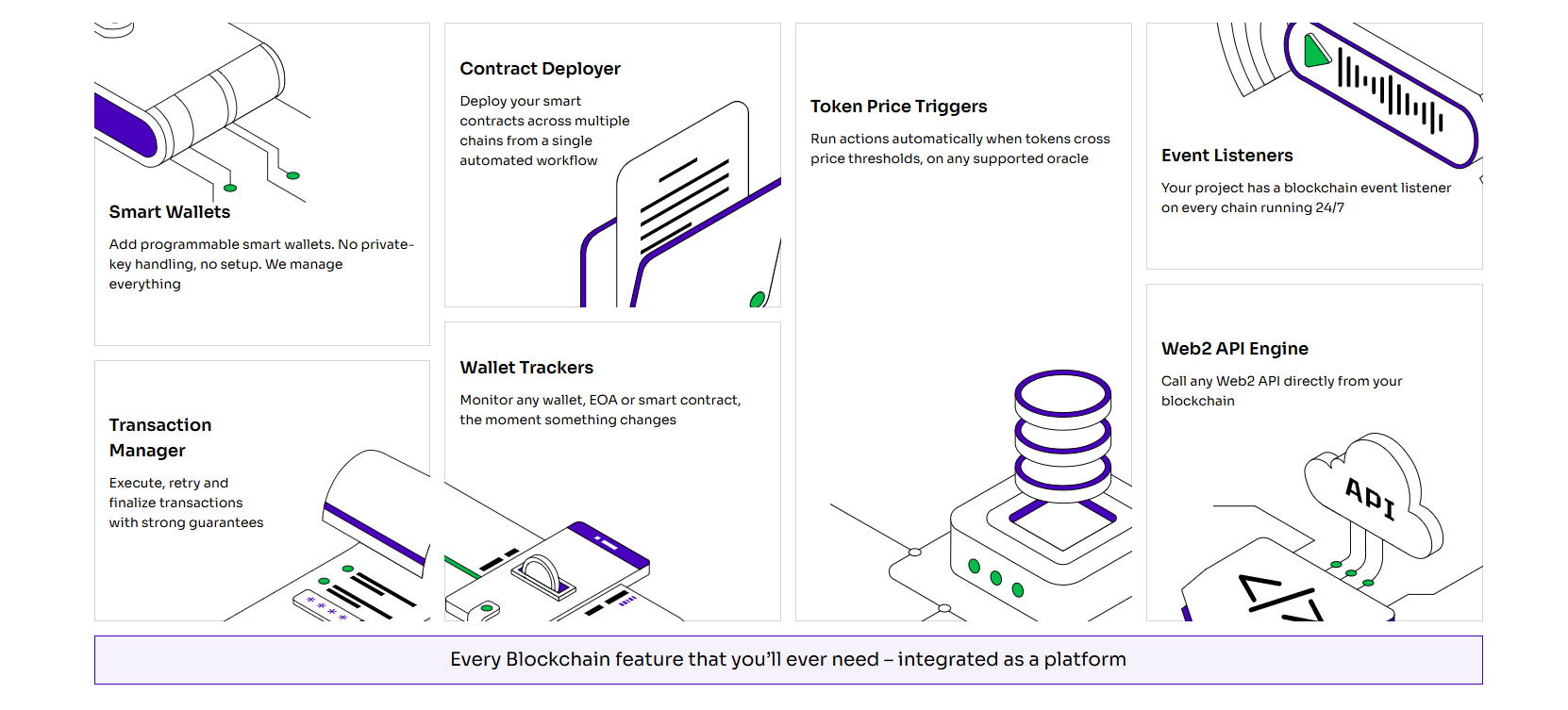
However, to address this, you would need Web3 workflow engines like Kwala. Here’s what it looks like in practice:
No infrastructure to babysit
Teams don’t need to run backend servers, manage databases, or maintain polling loops. There’s nothing to scale or patch, as execution remains deterministic and decentralized by default.
Built around events, not polling
Instead of asking systems to repeatedly check what happened on-chain, the Kwala workflow reacts the moment state changes occur.
Cross-chain logic without complexity
Teams can run workflows across multiple chains without custom bridges or complex orchestration. Thus, token movements, governance actions, and multi-network logic stay in one unified flow.
Syncing Web2 and Web3
On-chain activity can trigger emails, database updates, notifications, or enterprise tools without the fragile glue code that ties systems together.
Simple, declarative automation
Workflows are defined in simple YAML instead of imperative backend logic. That makes them easier to read, audit, and change.
Building Web3 without the backend burden
Blockchains are incredibly powerful. However, they were never designed to be easily programmable, observable in real time, natively interoperable with Web2 systems, or accessible to non-infra-heavy teams.
What’s missing is an automation and interaction layer that makes blockchain state changes usable, programmable, and connectable without maintaining servers. And that’s where Kwala’s no backend Web3 development can help in the following ways:
- Less infrastructure to maintain
- Fewer security risks off-chain
- Faster feature delivery
- Cleaner architecture aligned with blockchain principles.
Instead of forcing decentralized systems into centralized patterns, the platform lets teams build event-driven blockchains.
Curious about how to build Web3 apps without the backend hassle? Try the Kwala workflow to automate blockchain architecture without the operational burden.
FAQs on decentralized backend platforms
What are blockchain backend alternatives, and how are they different from traditional servers?
Blockchain backend alternatives replace custom servers with event-driven systems that react directly to on-chain state changes. These systems use deterministic workflows that reduce infrastructure overhead.
How do decentralized backend platforms improve security in Web3?
Decentralized backend platforms reduce reliance on private key management, centralized servers, and unaudited glue code. By moving automation closer to on-chain events, they significantly shrink the attack surface.
Do teams still need traditional backends when using Kwala?
Kwala eliminates the need for servers, databases, and polling infrastructure by treating on-chain events as first-class triggers. So, you don’t need traditional backends to manage blockchain interactions.