
 book a call with us
In Web3, most workflow issues don’t show up as big errors. They surface quietly: a delayed trigger, an action that runs out of order, a missed event when the network gets busy. For teams building real automation, this lack of visibility becomes the real bottleneck. Kwala solves a large part of this problem by giving developers reliable, real-time […]
Read MoreWeb3 teams rarely start out planning for multi-chain complexity. They begin with a simple requirement: monitor a contract, react to an event, run a function.
However, the moment the product needs to expand beyond a single network, the backend becomes a patchwork of RPC endpoints, indexing scripts, cloud functions, and chain-specific logic. What should be a small update turns into a new backend build each time.
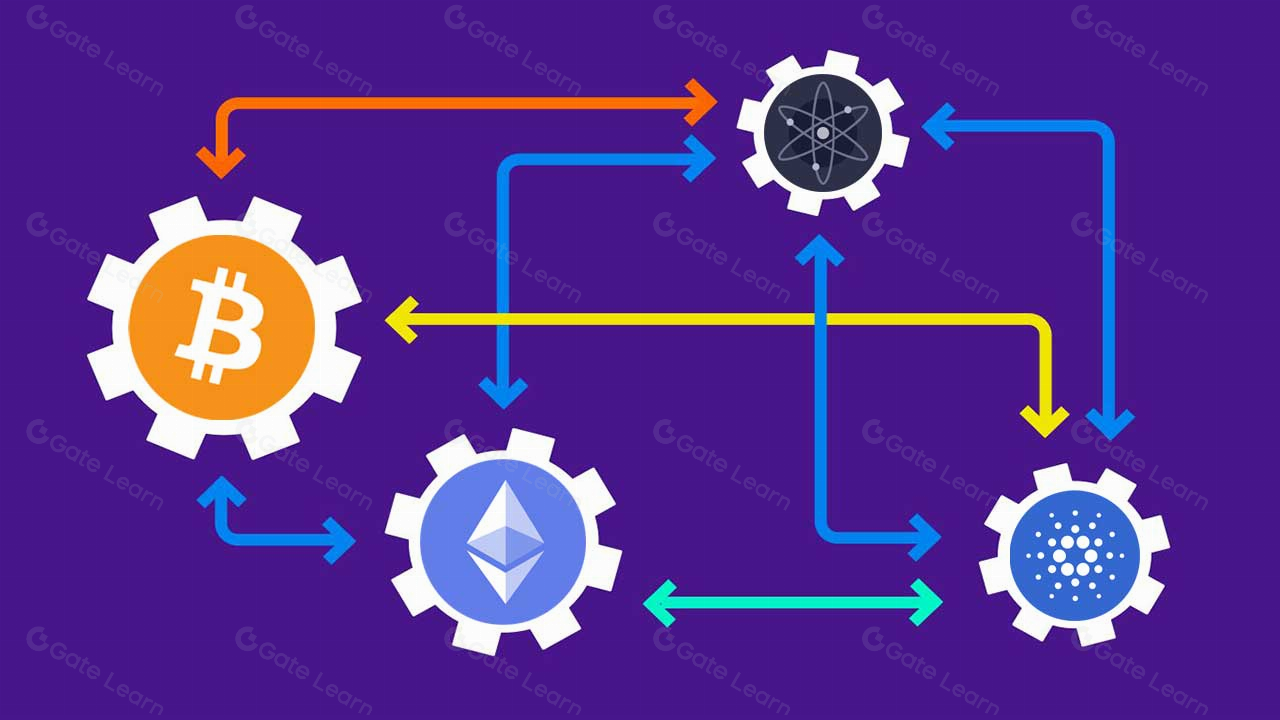
This is the gap Kwala closes. Instead of forcing developers to rebuild infrastructure for every chain, Kwala offers a chain-agnostic dApp backend that lets teams define one workflow and run it across multiple blockchains with no additional plumbing.
Why multi-chain backends get messy fast
Each blockchain behaves differently under the hood. Block times vary, RPC endpoints differ in reliability, gas costs fluctuate by network, and even the same action can execute under very different constraints across chains.
Developers end up rewriting listeners, actions, and glue code every time they add a new network. The maintenance effort grows exponentially, not linearly.
Most importantly, listening to on-chain events at scale needs resilient systems: high-uptime nodes, retry logic, ordering safeguards, and ways to prevent duplication. When every new chain requires a fresh implementation of this machinery, the real work of building your product slows down.
Kwala’s approach removes this entire category of overhead by giving developers a unified workflow layer that works the same across chains.
The shift: one workflow, many networks
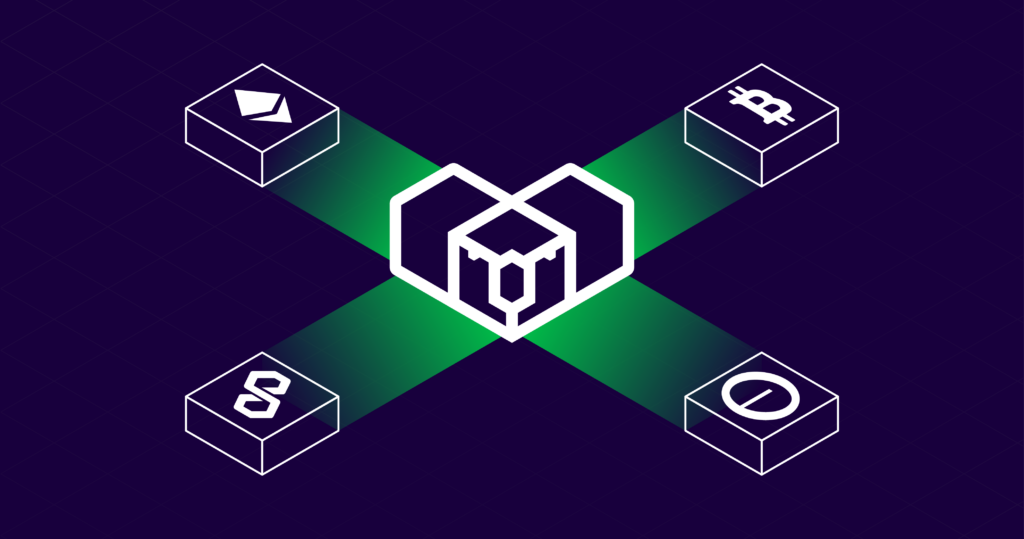
With Kwala, developers describe backend logic once and deploy it across the networks they choose. This is the foundation of a chain-agnostic dApp backend: backend that adapts seamlessly as it monitors or executes on different chains.
Kwala abstracts chain differences through simple YAML definitions. A workflow contains:
- A trigger (usually driven by on-chain events)
- A set of actions (contract calls, API calls, notifications)
- Execution mode (parallel or sequential)
- A target chain or multiple chains
Since the workflow is chain-agnostic by design, the same logic can be extended to another network without rebuilding listeners or infrastructure. Developers add a chain ID, deploy, activate, and the logic runs anywhere it needs to.
Monitoring-first architecture
For a chain-agnostic dApp backend, everything begins with reliable monitoring. Multi-chain workflows only work when the backend can consistently read on-chain events across networks. This is why Kwala’s monitoring engine sits at the core of how workflows run.
Kwala handles the heavy lifting behind event-driven automation:
- Streaming event logs from supported chains
- Normalizing data
- Matching patterns using event parameters
- Ensuring that only one node executes a workflow at a time
- Preventing duplicate runs through claimed execution
Since this monitoring layer is standardized, developers don’t need separate setups for Ethereum, Polygon, Base, or any other chain. They define what they want to listen to, and Kwala’s decentralized resource pool handles the rest.
This is also where Kwala’s decentralized backend platform matters. Monitoring and execution are distributed across nodes instead of a single server, reducing failure points and making multi-chain workflows more predictable at scale.
How “deploy once and run everywhere” actually works
When a developer deploys a workflow on Kwala, three steps occur:
- Register: The workflow is validated, saved, and registered so the network can recognize it.
- Deploy: The workflow moves into standby mode. Nodes in the network see it as eligible for execution.
- Activate: The workflow begins monitoring the defined chain(s). The moment the trigger condition is met – an emitted event, a block height, a schedule – execution starts.
Since actions are also chain-agnostic, the same workflow can call contracts across different networks or interact with APIs without rewriting backend layers. This is the essence of true multi-chain workflow automation: predictable logic, extended across networks with minimal effort.
What becomes instantly simpler
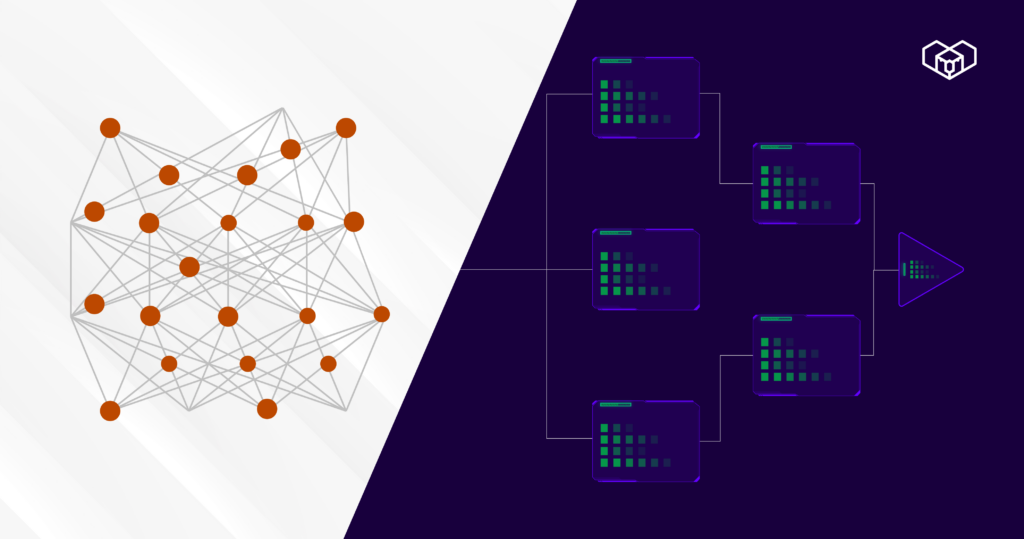
Teams adopting Kwala begin unifying backend operations. Patterns that previously required days of backend setup become quick to configure:
- Token transfer alerts across multiple chains without running custom indexers
- Cross-chain bridge monitors that watch events on one chain and trigger actions on another
- Dynamic contract calls using extracted event parameters
- Hybrid automation that calls Web2 APIs while reacting to on-chain triggers
- Parallel workflows for minting, issuing, notifying, or updating state automatically
These workflows scale without forcing teams to maintain servers, cron jobs, or monitoring scripts. Kwala handles listening, claiming, executing, and verifying. Developers focus on logic, and not infrastructure.
Why decentralization strengthens backend automation
A decentralized backend platform introduces reliability in a way traditional centralized services can’t. Kwala’s node network distributes execution and monitoring, making workflows resistant to single-node failures.
No private keys are ever shared; execution happens using the user’s own wallet, maintaining Web3’s ethos of permissionless ownership.
As usage grows, decentralization also improves cost efficiency. Instead of provisioning servers, teams use credits only when workflows execute. This makes scaling predictable, especially for multi-chain applications that would otherwise require multiple redundant systems.
A simpler path to multi-chain development
The promise of Web3 has always been interoperability, but backend fragmentation has kept developers bound to single networks.
Kwala shifts that model by giving teams a chain-agnostic dApp backend powered by multi-chain workflow automation and strengthened through a decentralized backend platform.
With one workflow that runs across blockchains, expanding to a new network becomes a configuration step. Teams ship faster, maintain less, and gain confidence knowing their backend logic is running on a system purpose-built for monitoring on-chain events at scale.
Multi-chain development shouldn’t be a backend rebuild every time.
With Kwala, developers deploy once, extend anywhere, and focus entirely on the product they want to bring to the world.
FAQs on chain-agnostic dApp backend
What happens if a chain my workflow depends on goes down or becomes unstable?
Kwala’s decentralized execution layer continues monitoring all enabled networks. If a specific chain stalls or stops emitting events, only that branch of the workflow pauses while the rest continues running normally. No manual intervention or redeployment is required; the system resumes automatically when the chain recovers.
Do I need to write custom indexing logic if I want to filter specific parameters in events?
No, Kwala supports event-parameter extraction natively through regex or indexed parameters. Developers can listen to highly specific patterns inside on-chain events without building or maintaining an indexer, even across multiple chains.
Can a single Kwala workflow trigger actions on multiple chains at once?
Yes, a workflow can monitor an event on one chain and execute actions on multiple other chains in response. This is one of the core advantages of multi-chain workflow automation: teams can design cross-network logic without stitching together separate backends for each chain.