
 book a call with us
What if your Web3 app could react to on-chain events the moment they happened: without a single server, listener, or custom backend? From NFT mints to DeFi movements and cross-chain updates, real-time reactions are now essential to how dApps operate. Yet achieving this responsiveness is anything but simple. Developers still manage their own decentralized event listener backend, track […]
Read MoreEvery Web3 developer knows this moment: you finally finish deploying a smart contract, only to realize the real work is just beginning. Now you need to listen to event logs, trigger actions, orchestrate flows across multiple chains, manage gas, handle retries, and make all of it reliable enough to serve real users.
In Web2, you would drop this into a Firebase function, a Zapier workflow, or a lightweight backend microservice. In Web3, the same task often turns into days of scripting, debugging, stitching per-chain logic, and maintaining infrastructure that distracts you from your actual product.
Kwala’s workflow builder lets you automate blockchain behavior without writing code, using simple YAML structures that describe what needs to happen. Kwala also handles how it happens across the chain ecosystem, and is the fastest way to transform smart contract events into production-ready automation. This blog explains how it all comes together.
Why blockchain automation needed a simpler path
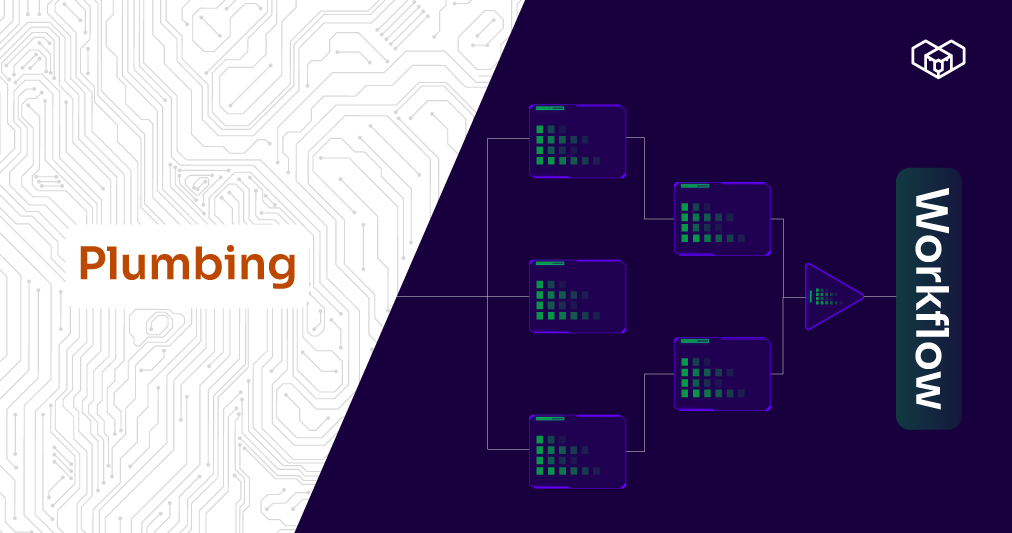
When event logs were introduced, the vision was clear: developers could automate anything by listening to on-chain activity. However, the reality never matched that promise.
Web3 builders still face friction at every step:
- Extracting event logs from nodes or API providers
- Managing rate limits, credits, and infrastructure constraints
- Writing backend logic to react to events
- Handling multi-chain differences in settlement, speed, and gas
- Repeating the same backend patterns across every new project
This is where most developers lose momentum. Instead of building products, they end up building backend plumbing. As Kwala’s team put it, the task became so cumbersome that developers needed “a place where you could simply say what you want… and the network would do it.”
That’s exactly what YAML-based blockchain automation enables.
The power of YAML for declarative blockchain automation
YAML has quietly become one of the most powerful paradigms in software automation. It powers CI/CD pipelines, cloud provisioning, infrastructure-as-code, Kubernetes deployments, and more.
Its advantage? Complex behavior expressed in clean, structured, human-readable blocks.
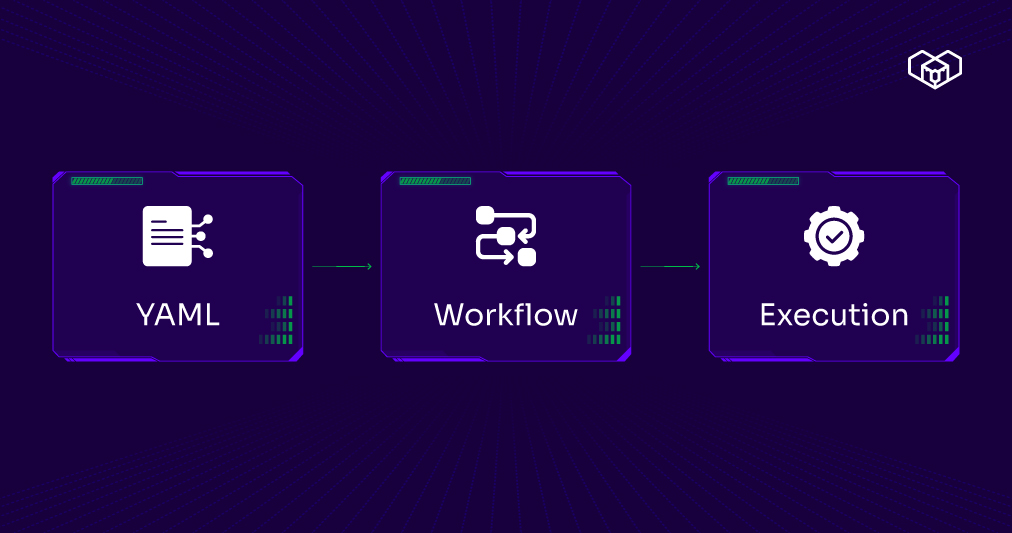
You define:
- What smart contract your workflow should listen to
- Which events should trigger execution
- What actions should happen in response
- Which chains should receive the next step
- Any logic, conditions, or routing you need
All through a YAML-based form builder that feels closer to filling out a simple configuration sheet than writing backend code.
For smart contract developers, this is transformative. Instead of spending a week writing orchestration scripts and setting up infrastructure, the backend becomes:
listen:
contract: <your-contract-address>
event: Transfer
actions:
– type: call_contract
chain: base
method: settleOrder
That’s the entire point. You describe the logic; Kwala executes it across the decentralized network.
Replacing Backend Builds with Kwala’s Low-Code Workflow Builder
Traditionally, building a blockchain backend means juggling scripting languages, providing SDKs, node quirks, retries, failure states, and gas management.
With Kwala, developers repeatedly tell us the same thing: tasks that once required “7-8 work days across development and testing now take 15–20 minutes.”
That speed is possible because Kwala abstracts everything developers shouldn’t have to rebuild:
- Event streaming
- Reliable execution
- Multi-chain orchestration
- Gas handling
- Web2 API calls
- Error management
- Workflow scaling
What used to be backend development is now simply workflow configuration. It’s not just no code; it’s no backend.
This is where the phrase low-code blockchain backend feels accurate. Kwala removes the need to write and maintain custom backend services to support on-chain workflows.
Cross-chain logic without writing scripts
Different blockchains are built for different purposes: settlement on Ethereum, speed on Solana, low cost on L2s like Base or Polygon. Most projects naturally want to distribute logic across these chains. However, in reality, developers are forced to keep everything on one chain because cross-chain backend logic is too complex to manage manually.
Kwala makes multi-chain orchestration declarative.
With YAML workflows, you can:
- Listen to events on Ethereum
- Process logic on an L2
- Trigger actions on another chain
- Call Web2 APIs in between
It’s the simplest expression of a low-code blockchain backend, because the heavy lifting is absorbed by Kwala’s decentralized network and execution engine.
Why YAML is the right foundation for Web3 automation
Blockchain automation has a structural challenge: it must remain transparent, auditable, composable, and easy to maintain as systems evolve. YAML offers exactly that:
- Human-readable logic → easy to review, share, and audit
- Deterministic structure → ideal for versioning and reproducibility
- Declarative style → perfect for expressing intent without scripting
- Scale-friendly configuration → new chains and new features fit cleanly into the model
The goal was to remove the “major learning curve” and create automation that feels like filling out a simple workflow form.
The result is a workflow builder that works for:
- Indie developers
- Web3 automation
- Enterprise teams testing blockchain integrations
- Web2 engineers exploring decentralized systems
The threshold for participation drops dramatically, while the possibilities expand.
What you can build with Kwala’s YAML workflows
Here are real examples of what becomes effortless with Kwala:
- Cross-chain NFT settlement flows
- Automated game reward triggers
- Real-time DeFi position rebalancing
- Off-chain notifications or webhook triggers from on-chain events
- Multi-chain order routing and settlement
- Smart contract monitoring with instant downstream actions
If your smart contract emits an event, you can automate around it – without writing backend code.
A simpler future for backend automation in Web3
YAML has already transformed automation across cloud and DevOps. With Kwala, it now transforms automation across blockchains too. Instead of repeatedly rebuilding the same backend logic, developers can finally focus on what matters: the actual product.
Kwala provides declarative workflows, handles the cross-chain orchestration, and manages the execution-reliability-infra trio.
You simply describe the logic, Kwala brings it to life.
FAQs on YAML-based blockchain automation
Does Kwala’s YAML workflow builder require me to modify my existing smart contracts?
No, Kwala listens to your contract’s emitted events exactly as they are. You only configure the workflow around those events, no redeployment or code changes needed.
Can I include off-chain data or APIs inside a YAML workflow?
Yes, Kwala workflows can call external REST APIs, fetch off-chain data, and use that data to drive on-chain actions. This makes hybrid Web2 ↔ Web3 automation extremely simple.
What if my workflow needs to scale to thousands of events per second?
Kwala’s decentralized execution layer scales horizontally. As event volume increases, more nodes process actions concurrently, allowing workflows to handle high-throughput use cases.