
 book a call with us
The moment a dApp needs to react to on-chain activity, teams face a familiar bottleneck: every workflow demands its own patchwork of monitors, scripts, queues, and retry logic. What starts as a single event subscription quickly grows into a fragile backend that must stay online around the clock. This is why developers increasingly rely on […]
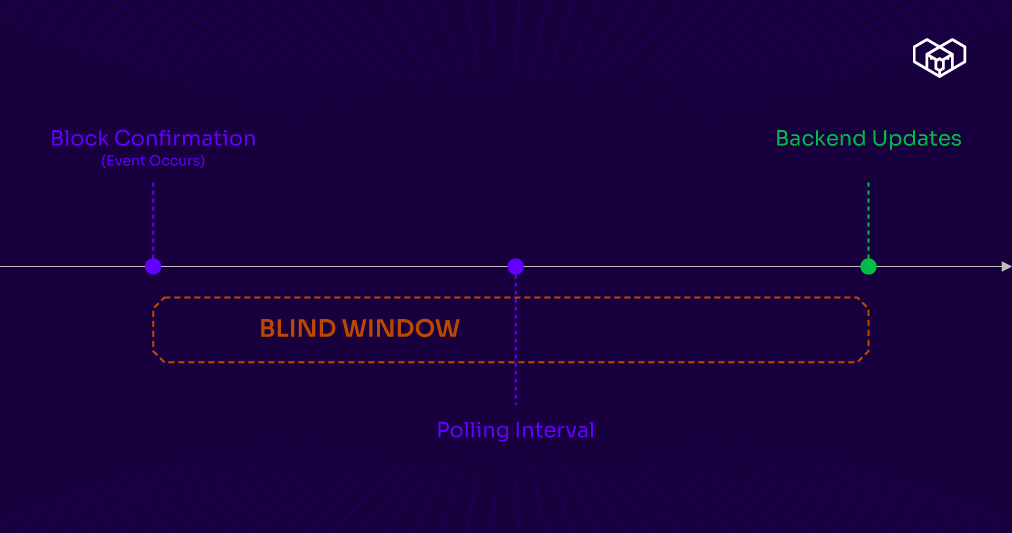
Read MoreYour liquidation protection logic executes on-chain. The collateral ratio drops, the contract triggers, and the position closes within the same block. But your monitoring dashboard still shows the old state because your polling script runs every 30 seconds, and you just missed the window.
DeFi developers face this gap constantly. The blockchain operates in real-time, but most backend systems pull data in batches, creating blind spots where positions are exposed, liquidations are delayed, and critical events slip through undetected.
The solution lies in event-driven workflow monitoring that detects on-chain activity the moment it executes. Kwala provides this layer, eliminating polling infrastructure and delivering instant awareness when blockchain events occur.
In this piece, we walk you through how DeFi protocols replace delayed monitoring with real-time detection.
Why polling-based monitoring fails DeFi protocols
Traditional monitoring relies on your backend repeatedly querying the blockchain, checking if something new happened. This creates three problems:
- Resource waste: Your script runs constantly regardless of activity, burning through API calls and RPC quotas even during idle periods
- Wasted computational resources: Your backend runs continuously regardless of activity, burning through RPC calls even when the chain is quiet. You pay for constant checking, not for actual information.
- Infrastructure fragility: You need servers running 24/7, managing retries, handling state, and ensuring the polling loop never crashes. The moment your script fails, your Web3 backend analytics & workflow monitoring system goes dark completely.
How event-driven monitoring removes the detection lag
Event-driven architecture changes the model fundamentally. Instead of your backend asking the blockchain if something happened, the monitoring layer reacts the instant an event executes on-chain.
Kwala operates as a decentralized workflow monitoring system that registers your event triggers directly with the blockchain.
When a smart contract emits an event you’ve defined – a liquidation, a transfer above a threshold, a proposal submission – Kwala’s execution layer detects it immediately and runs your workflow within the same block confirmation window.
This instant detection eliminates the exposure gap that polling systems create. Your DeFi protocol can react when information is still actionable. Fewer safeguards are needed because you’re operating on current data.
Real-time response also simplifies your infrastructure. You’re not maintaining polling scripts, managing server uptime, or handling retry logic. The monitoring happens on Kwala’s decentralized execution layer, removing the operational burden from your team entirely.
DeFi workflows that require instant detection
The operational gap between event execution and backend awareness creates distinct failure modes across DeFi workflows. Each workflow type faces a different consequence when detection lags behind execution.
Liquidation monitoring sits at the center of risk management. Lending protocols depend on the assumption that undercollateralized positions get liquidated before bad debt accumulates.
When your real-time on-chain monitoring system detects a collateral breach instantly, the liquidation executes before the position deteriorates further.
Oracle price updates follow the same pattern of time-sensitive dependency. Chainlink price feeds update in specific blocks, and protocols that recalculate positions or execute conditional swaps first capture value during volatile periods.
Those that react late face adverse selection. DeFi smart contract alerts delivered in the same block window ensure your protocol stays ahead of market movements.
The remaining workflows share this urgency across different operational contexts:
- Governance execution: Proposals reaching quorum trigger the next phase immediately, keeping DAO workflows moving without waiting for the next polling cycle
- Treasury precision: Multi-sig transfers, vesting releases, and yield rebalancing generate events requiring immediate logging for complete audit trails
- Cross-protocol coordination: Complex workflows spanning multiple contracts need synchronized detection to maintain execution order and prevent state mismatches
Building event monitoring without infrastructure overhead
Kwala removes the burden of maintaining monitoring infrastructure. You define the event trigger in YAML, specify workflow logic, and deploy to the decentralized execution layer. The protocol handles monitoring, execution, and reliability.
Unlike traditional blockchain event tracking tools that require constant server maintenance, Kwala’s decentralized model shifts the operational burden away from your team. You configure the workflow once, and the system handles everything from event detection to execution guarantees.
Your workflow can include:
- Conditional logic and data transformations
- Multi-step actions triggered by a single event
- Cross-chain monitoring and execution
- Web2 API calls for notifications or database updates
Example: Monitor a liquidation event, verify transaction details, calculate protocol health, trigger a Discord alert, and execute an on-chain rebalancing transaction. All within one workflow definition using Web3 event automation.
The pay-as-you-go model eliminates server overhead. You only pay execution credits when workflows actually run. No idle polling costs, no uptime management. When events happen, workflows execute and charges apply. When the chain is quiet, you pay nothing.
Cross-chain support lets one workflow track an event on Ethereum and trigger an action on Polygon without additional complexity. Critical for protocols operating across networks where separate infrastructure multiplies operational burden.
Learn how Kwala enables on-chain notifications for DeFi workflows requiring instant detection.
Real-time detection as competitive infrastructure
DeFi protocols operate in environments where seconds determine both competitive edge and risk exposure. Event-driven Web3 backend analytics & workflow monitoring shifts the baseline from delayed-time to real-time, removing the artificial lag that polling introduces.
Kwala provides the workflow monitoring backbone DeFi developers need: instant detection, decentralized execution, and pay-per-use economics. Your backend stays invisible, monitoring stays active, and your protocol stays informed the moment events execute on-chain.
Protocols that replace polling with event-driven workflows gain operational precision that compounds over time – faster liquidations, tighter risk management, and confident execution during volatile periods.
Explore Kwala’s decentralized backend for real-time on-chain monitoring.
FAQs
How does Kwala detect events faster than polling scripts?
Kwala registers event triggers directly with the blockchain’s execution layer, reacting as events are emitted rather than checking periodically. This removes polling delay and provides detection within the same block confirmation window.
Does Kwala require running my own indexer or RPC node?
No. Kwala’s decentralized backend handles all monitoring and execution infrastructure. You define event triggers and workflow logic – the protocol manages the technical requirements for reliable real-time detection without servers or nodes on your end.
Can Kwala monitor events across multiple blockchains in one workflow?
Yes, a single workflow can listen to events from multiple chains and route them through consistent execution logic, reducing duplication and chain-specific backend code.