
 book a call with us
What if your Web3 app could react to on-chain events the moment they happened: without a single server, listener, or custom backend? From NFT mints to DeFi movements and cross-chain updates, real-time reactions are now essential to how dApps operate. Yet achieving this responsiveness is anything but simple. Developers still manage their own decentralized event listener backend, track […]
Read MoreTeams building in Web3 want one thing: systems that don’t break the moment real users show up. That’s exactly why a strong Web3 workflow automation protocol matters. It keeps your smart contracts responsive, your data structured, and your operations predictable.
When the protocol is built well, you get real Web3 security features, dependable scale, and transparent blockchain workflows without duct-tape engineering or surprise failures. You can even automate most of this with tools specifically designed for the task, with Kwala being one such option that eases the process.
This piece walks through the core traits of scalable Web3 automation, some real use cases, and how Kwala makes building this automation easy.
What is a web3 workflow automation protocol?
A Web3 workflow automation protocol is a backend layer that listens to on-chain events and automatically triggers actions across smart contracts and apps. It removes the need for custom servers, manual monitoring, or ad hoc scripts. Developers get a system that reacts instantly, scales cleanly, and keeps processes consistent.
Why does Web3 workflow automation protocol matter?
The space is growing rapidly, with 23,343 active Web3 developers worldwide contributing to blockchain projects as of 2024. This growth is driven by several factors like:
- Strong Web3 security features that protect workflows from tampering
- Real scalable Web3 automation that handles high event volume
- Less backend work and fewer engineering hours wasted
- Reduced risk of failures in production
- Clearer audits through transparent blockchain workflows
- Simple connections to notifications, CRMs, and Web2 tools
- Safer smart contract actions through automated, rule-based triggers
More founders are realizing how much easier growth becomes when automation handles heavy lifting. A reliable protocol lets teams ship faster, scale confidently, and focus on the product, instead of plumbing.
5 Key features to look for in a Web3 workflow automation protocol
Web3 applications increasingly rely on automated responses to on-chain activity, from protocol logic to user-facing operations. A workflow automation protocol becomes the layer that interprets these events and executes actions reliably across chains and systems.
Evaluating the right features helps ensure automation remains scalable, secure, and infrastructure-light as applications grow.
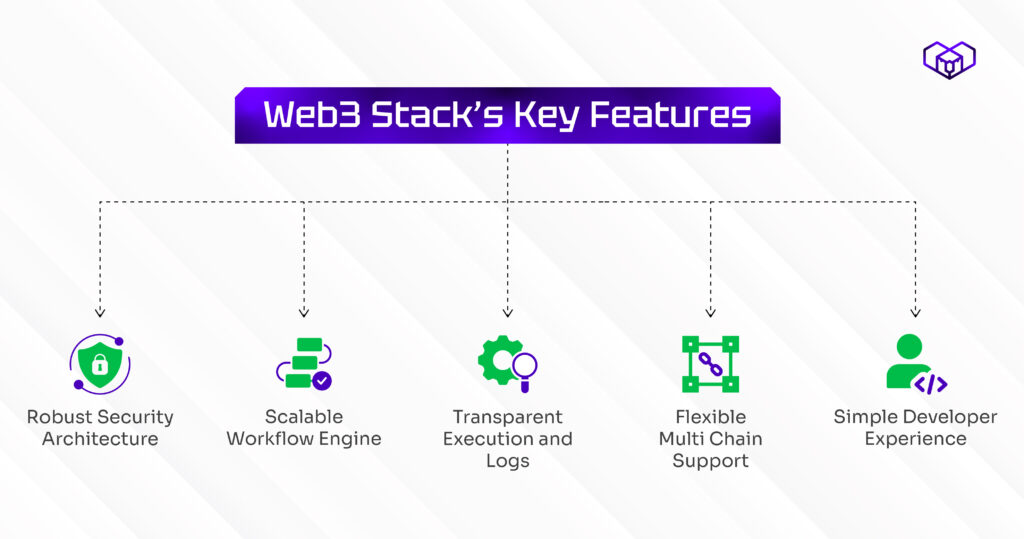
Here they are:
1. Robust security architecture
A reliable protocol must include strong Web3 security features that prevent tampering, missed events, or unauthorized triggers. This includes verifiable execution, encryption, permission controls, and isolated environments for sensitive actions.
Smart contracts only work well when the automation layer is just as secure as the chain they run on.
2. Scalable workflow engine
It is also important to have a protocol that supports scalable Web3 automation. It should be able to:
- Process heavy event loads in real time
- Handle thousands of triggers in parallel
- Scale across multiple chains without custom infrastructure
- Keep workflows fast even during high network congestion
Scalability ensures your automation remains reliable as usage grows.
3. Transparent execution and logs
Full visibility into automation behavior is essential. Clear logs, traceable actions, and predictable behavior shape blockchain workflows that are easy to debug, audit, and trust. This transparency also helps teams stay prepared for compliance reviews and investor audits.
4. Flexible multi-chain support
Modern apps stretch across ecosystems. A strong automation protocol should support multiple chains out of the box and trigger actions across them seamlessly.
This flexibility helps teams grow without having to reinvent infrastructure or write chain-specific backends repeatedly.
5. Simple developer experience
Ease of use matters more than ever. The best Web3 smart contract workflow tools offer intuitive dashboards, templates, and clean SDKs, allowing developers to automate tasks without wrestling with infrastructure. Good DX shortens setup time and reduces the risk of misconfigured triggers.
Download this checklist for smarter Web3 workflow automation decisions
To make evaluating protocols easier, here’s a simple checklist that highlights every key feature you should look for when choosing or building a Web3 workflow automation setup. It keeps your team aligned, helps you avoid blind spots, and ensures you pick a protocol that can scale safely.
You can use it as a quick reference for every build:
Web3 Workflow Automation Protocol Checklist
Real-world use cases of Web3 workflow automation
Web3 workflow automation is used where applications need to react instantly and reliably to on-chain activity. Instead of relying on manual intervention or custom backend services, teams use automated workflows to move assets, trigger actions, and keep user-facing systems in sync with what’s happening on-chain.
In real products, a scalable Web3 workflow engine becomes the connective layer between smart contracts and execution.
Here are specific ways this shows up in production environments.
1. Aave: Automated liquidations keep lending markets stable
Liquidations on Aave don’t wait for human timing. Chainlink Automation constantly checks collateral ratios and triggers action the moment a position turns risky.
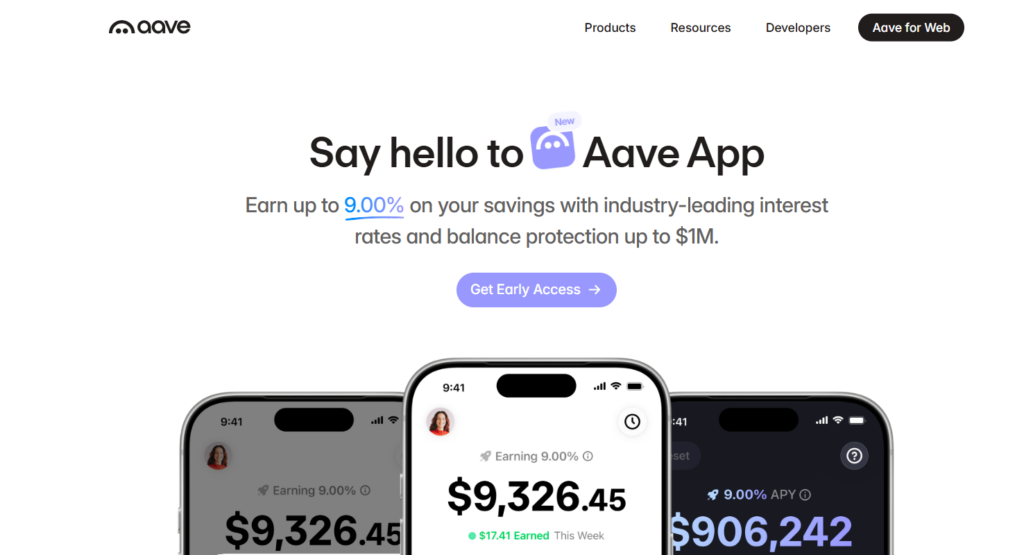
The setup creates secure workflow automation for blockchain and gives lenders confidence through transparent blockchain workflows that show exactly when and why a liquidation happened.
Beefy Finance: Auto compounding built on Gelato’s automation layer
Beefy Finance is a yield optimizer that uses Gelato, a scalable Web3 workflow engine, to automatically compound vault rewards. This removes the need for users to manually claim and restake their earnings.

Why teams choose Kwala
Kwala is a Web3-native workflow automation protocol that acts as an execution and orchestration layer for blockchain applications. Instead of building custom listeners, backend services, and retry logic for each chain, teams define workflows that react directly to on-chain events and execute actions in a decentralized, verifiable environment.
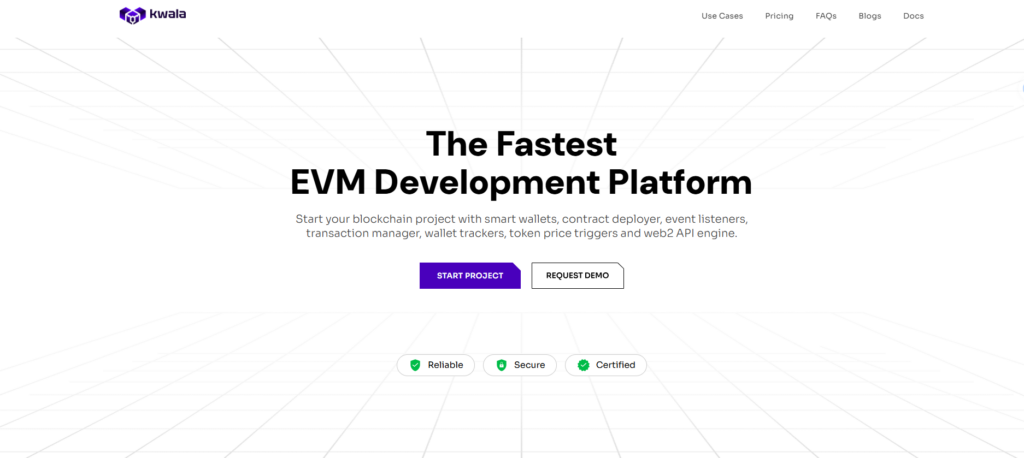
It is designed for production use cases where security, scalability, and transparency are non-negotiable. Workflows run without centralized servers, emit auditable execution logs, and scale across chains without forcing developers to manage infrastructure or rewrite backend logic as networks are added.
Along with that, here’s what it can help you with:
- Event-based on-chain monitoring using the correct event trigger to track mints, transfers, and contract activity in real time
- Automatic MetaMask configuration (chain ID 1905) so users never switch networks manually
- Decentralized, credit-based system that avoids vendor lock-in and removes reliance on centralized servers
- Supports Web2 API calls and major blockchain networks, making cross-stack automation simple
- Executes multi-chain actions for calls, approvals, transfers, and pipelines
- Transparent blockchain workflows with clean, verifiable logs for audits and debugging
- Pay as you go usage model that scales with your workload instead of forcing fixed commitments
Kwala provides teams with a clean, reliable automation layer that responds instantly to on-chain events and ensures every workflow remains secure, predictable, and effortless to maintain.
Scaling Web3 the right way with Kwala’s automation protocol
Web3 teams move faster when their automation layer is secure, scalable, and transparent. A strong Web3 workflow setup creates transparent blockchain workflows, supports safe execution, and gives developers the clarity they need to build with confidence.
Kwala provides this automation layer through event-based on-chain triggers, decentralized execution, and verifiable workflow logs. By removing the need for custom listeners and centralized servers, it allows teams to scale across chains while keeping workflows clear, auditable, and easier to maintain.
As a result, automation remains clear, auditable, and easier to maintain – giving Web3 teams the confidence to scale without losing control or transparency.
Try Kwala to automate your Web3 workflows with clarity, speed, and complete control
FAQs on Web3 workflow automation
What is workflow automation?
Workflow automation is the process of using systems to run tasks automatically instead of doing them by hand. In Web3, this means using Web3 workflow tools to trigger smart contract actions, react to on-chain events, and keep processes consistent through transparent blockchain workflows.
What are the three automated workflows?
The three common types are:
- Task-based workflows
- Rule-based workflows
- Event-driven workflows
Why did Web 3.0 fail?
Web 3.0 didn’t completely fail, but early expectations were bigger than the actual utility. Many products lacked scalable Web3 automation, user-friendly interfaces, or real value beyond speculation.